


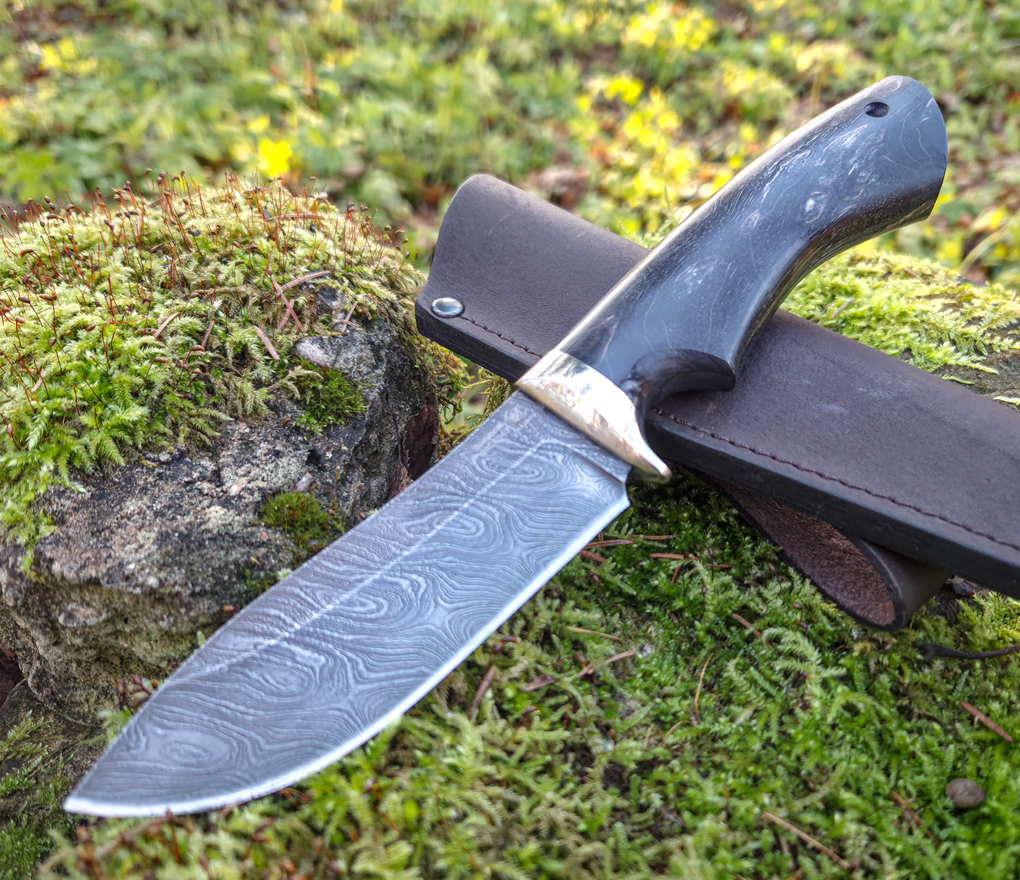
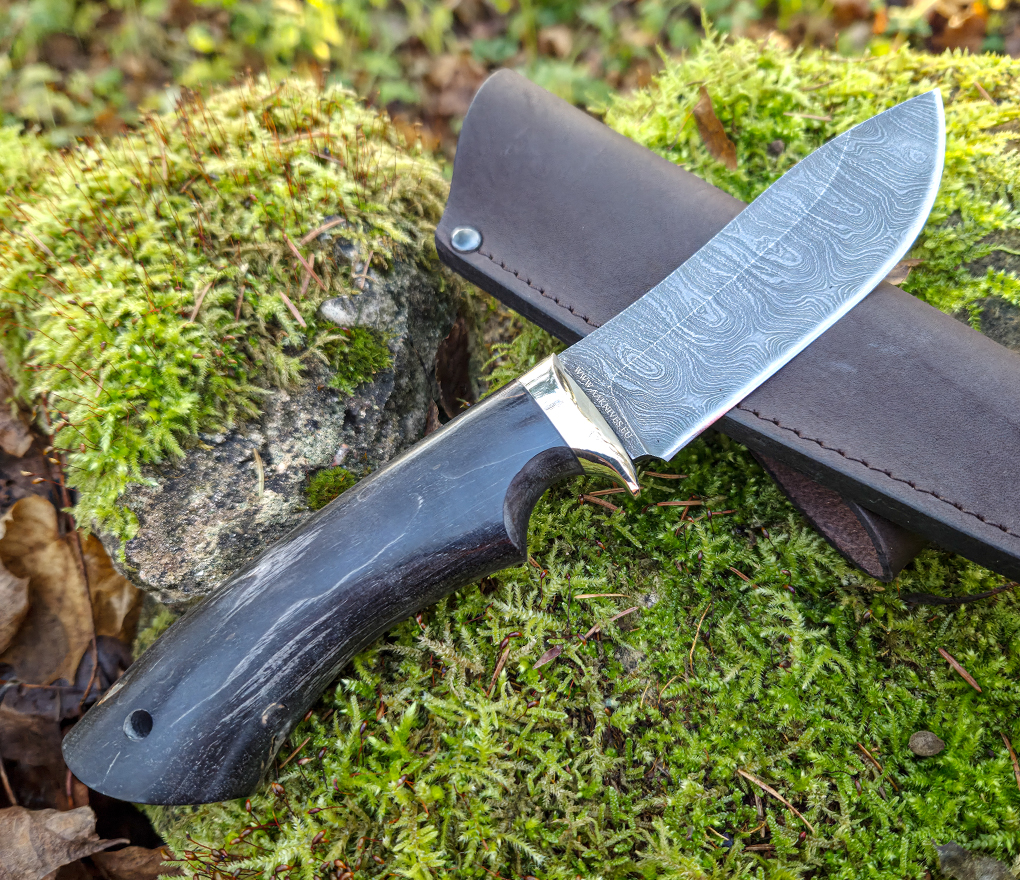
Knife specifications: “Kuilis”
Steel: Damascus (HVG, U10, ShH15), 700–800 layers
Hardness: 61 HRC
Blade length (mm): 110 / 4.33 inches
Blade thickness (mm): 3.5 / 0.14 inches
Blade width (mm): 33 / 1.29 inches
Handle: stabilized Karelian birch
Total length (mm): 240 / 9.45 inches
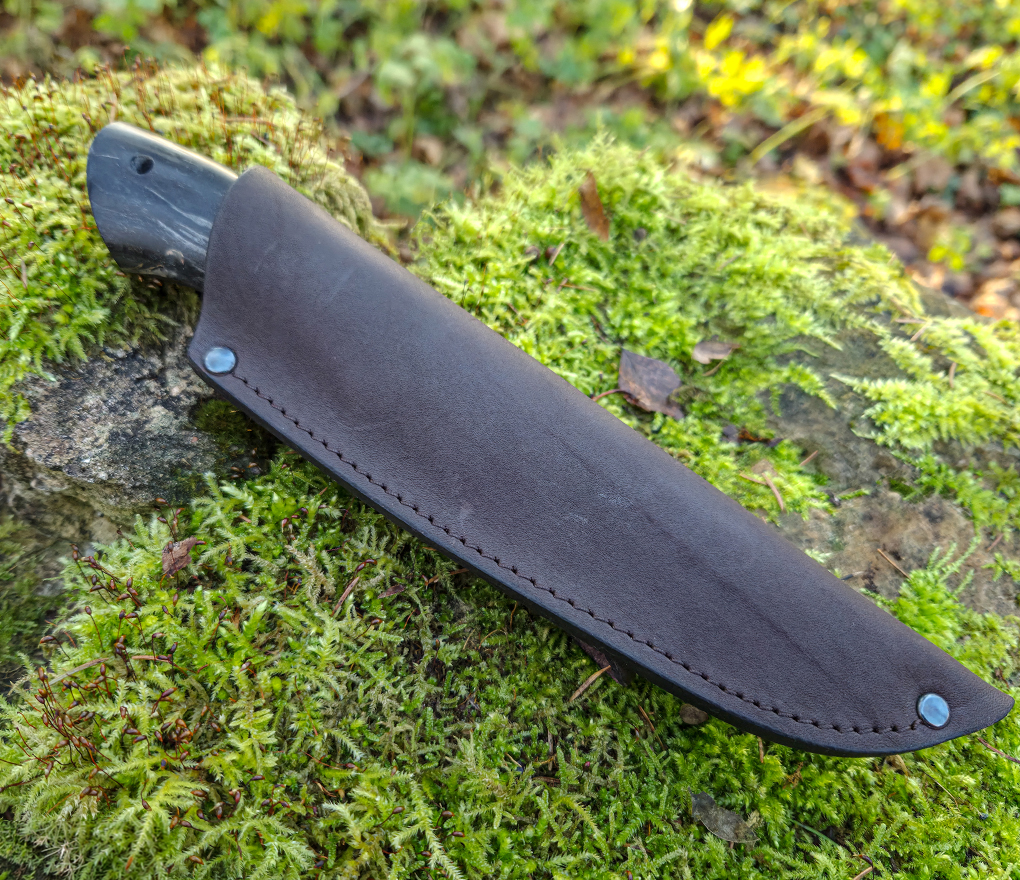
Set includes: knife, leather sheath
Design: “AA knives”
Forged specifically for “AA knives”
Damascus steel – Forged Damascus steel is created using layers of steel with varying hardness and strength, which are arranged in a specific sequence within a single plate. The sheet is then forged repeatedly, creating layers and a unique pattern.
This complex technological process is carried out by hand. The steel produced in this way is characterized by increased strength, high hardness, excellent cutting properties, and beauty.
Damascus steel with more than 700 layers.
Package contains Damascus steel ShH15 + HVG + U10A, heat treatment temperature 860 °C
Advantages of Damascus steel knives:
Increased strength
High hardness
Excellent cutting performance
Beautiful design
Long-lasting sharpness
Hardness: 60–62 HRC.
Handcrafted
Use and Care of Damascus Steel
Damascus steel is widely recognized as one of the most durable types of knives, making it the choice of hunters, anglers, and outdoor enthusiasts.
The Damascus steel offered by AA Knives is forged from three different types of steel, resulting in a material with a well-known and unique pattern that combines the three positive working properties of the steels used—strength, flexibility, and the ability to retain a sharp edge for a long time. It is believed that, thanks to its outstanding cutting performance, this steel often even outperforms stainless steel products, as its blade creates a micro-serrated surface that is unique to steels forged together. Since Damascus steel is one of the most rust-resistant steels, it is especially important to remember to care for it properly.
Just as you wouldn’t immediately put a hunting rifle you’ve brought home from a hunt—one that hasn’t been wiped down and cleaned—into a safe, you, too, must take care of your knife, which serves a much more important purpose during a hunt than a firearm. After use, a Damascus steel knife must be thoroughly wiped down, cleaned of dirt, and dried so that it does not absorb moisture during storage, which could cause rust over time, and you shouldn’t forget to oil it. You don’t need to buy professional care products for this; any cooking oil found in the kitchen will do, since a hunting knife almost always comes into contact with meat and other food products, so using machine oil to protect the knife is not recommended. Don’t forget about regular sharpening and maintenance, either.
However, we’ve all had moments when we’ve left a knife we’ve just used in the car or at the bottom of a bag, and after it’s been there for a while, dark spots appear on the blade—the first signs of rust. But does that mean you should give up on your favorite tool? Absolutely not! To fix the problem, simply go to any computer store and buy the finest-grit sandpaper (P2000–2500) and gently rub the blade to remove the rust spots.
Keep in mind that a knife will last longer and perform better during use if you take a moment each day to care for it properly, but if you’re still unsure about how to care for your knife after purchasing it, AA Knives will be happy to offer advice to make working with your knife comfortable and enjoyable.




 No products in the cart.
