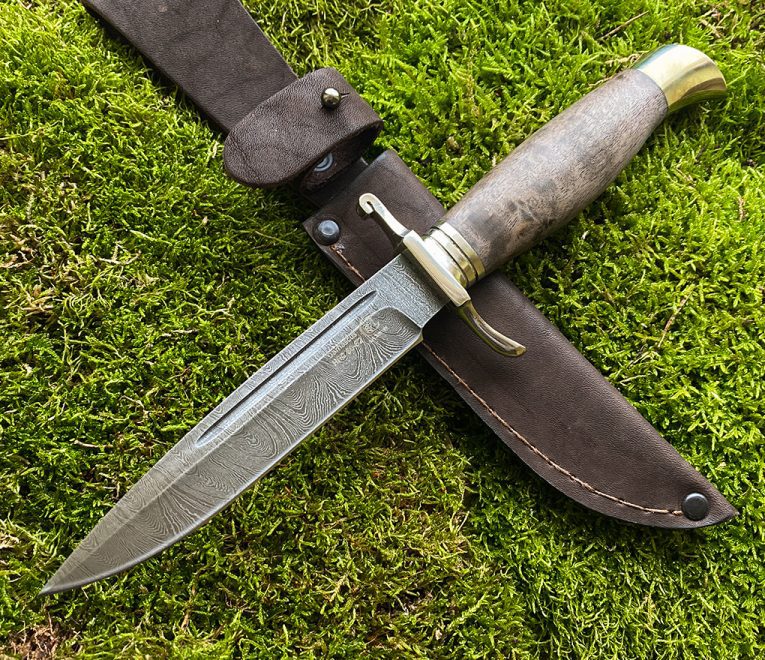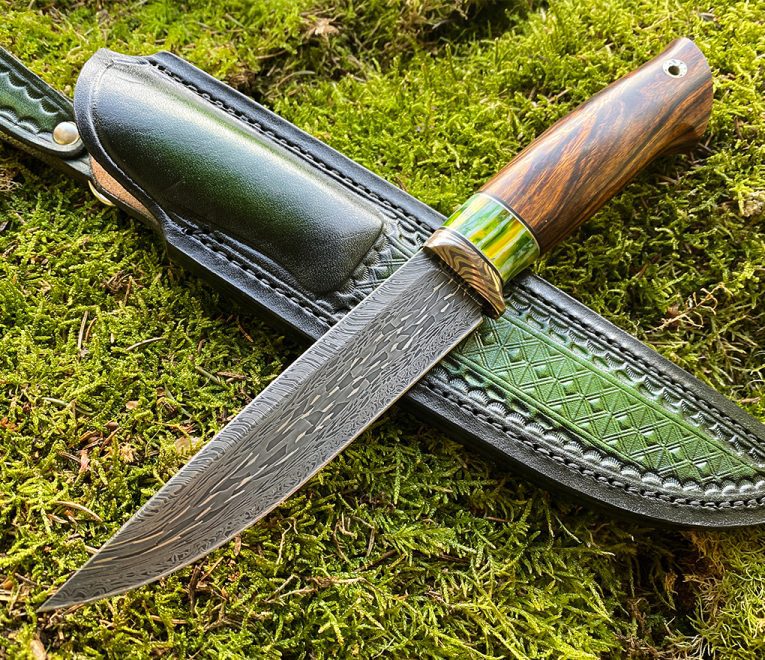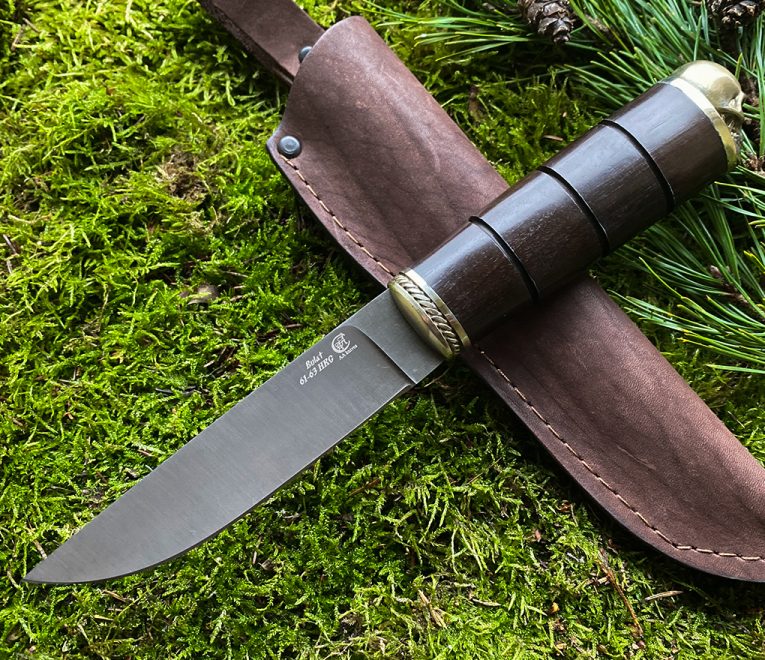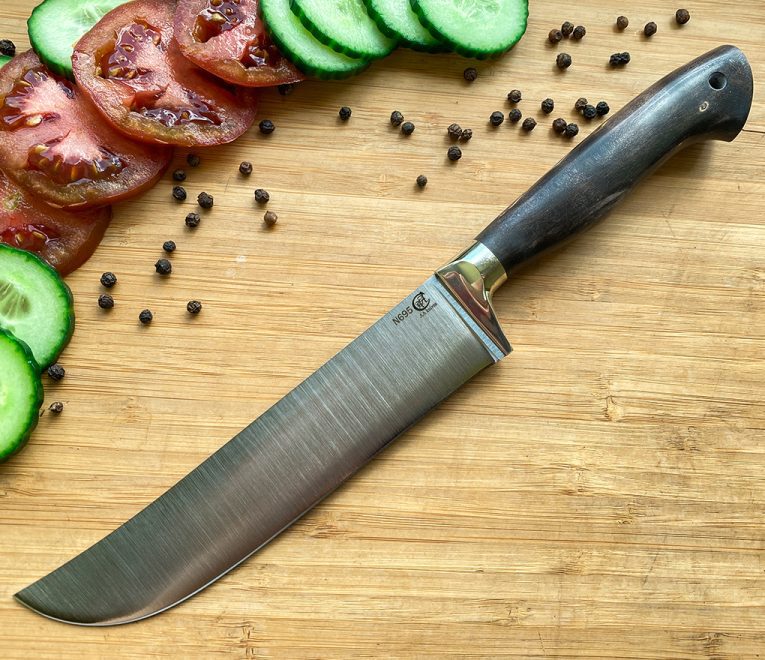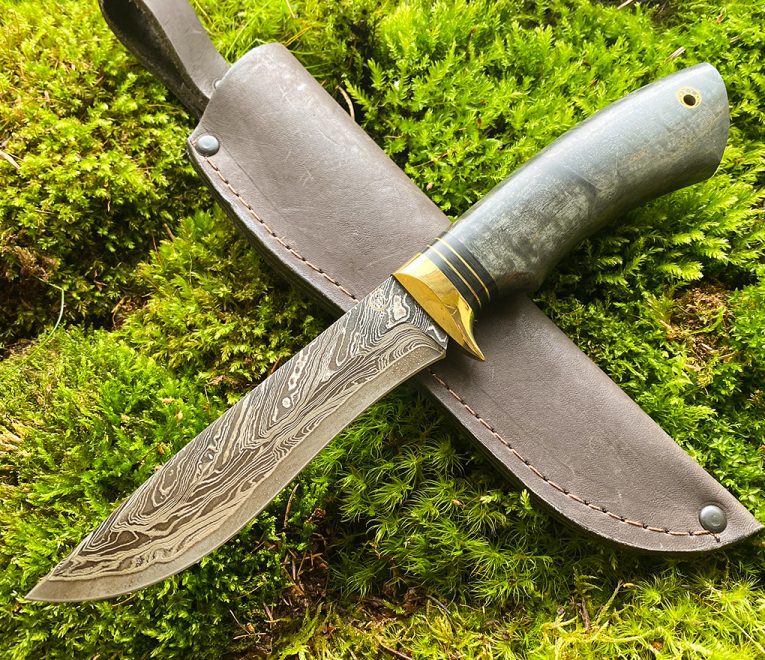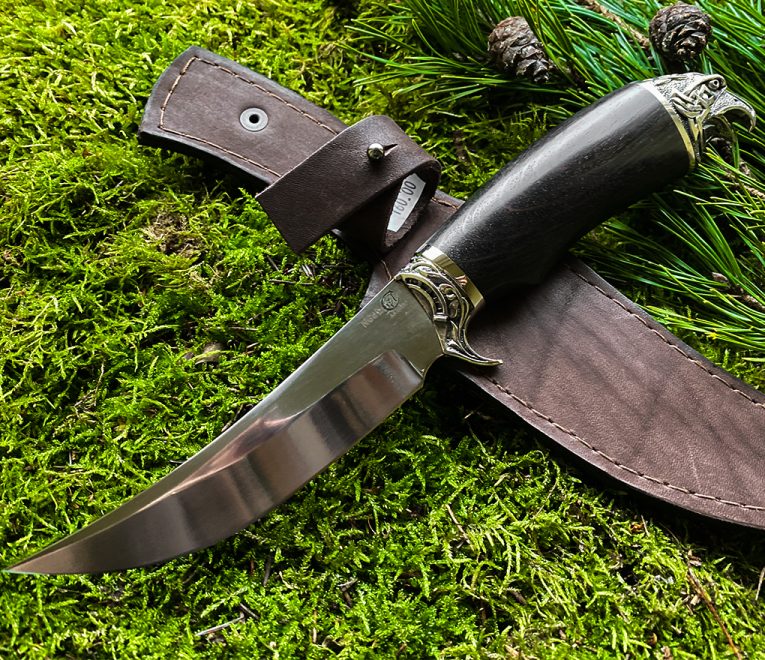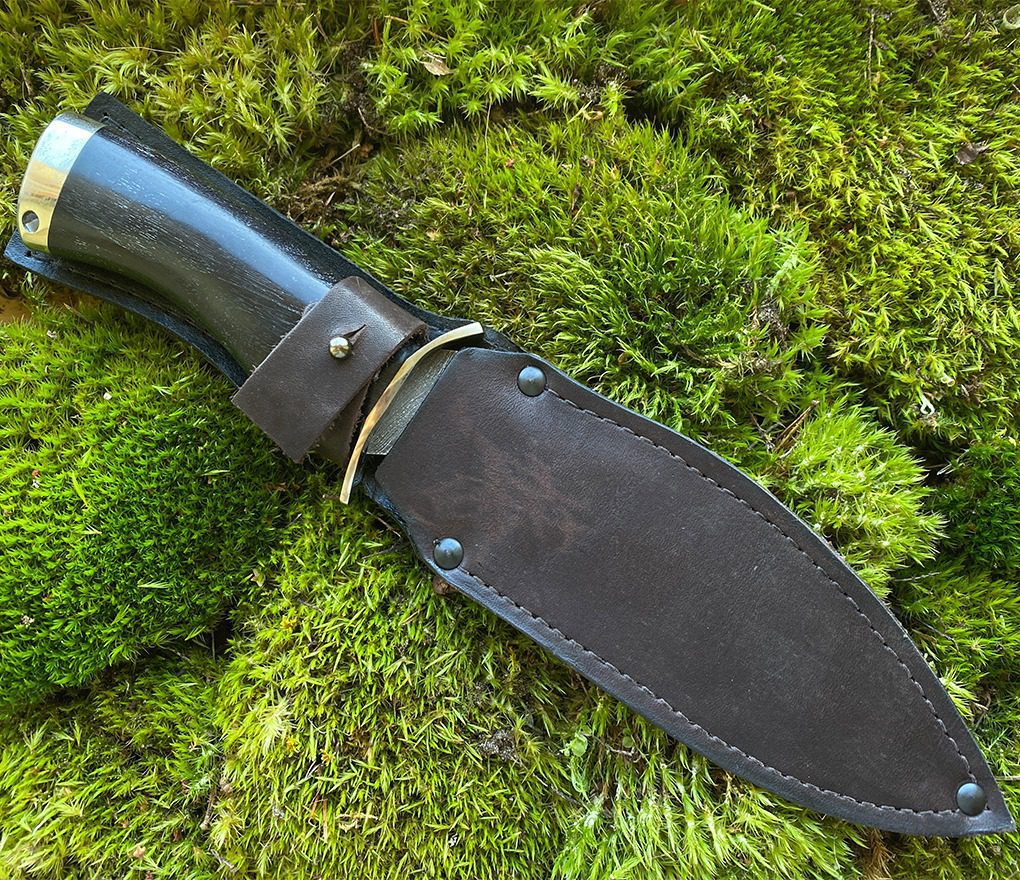
Knife specifications: ”WARRIOR”
Steel: Damascus steel knife (HVG, U10, ShH15 )
Hardness: 60-62 HRC
Blade length (mm): 160
Blade thickness (mm): 3 – 0,5
Blade width (mm): 34
Handle: black wood
Overall length (mm): 281
Hand forged Damascus steel created with a package of steels of different hardness and viscosity, which fold into a plate in a specific order. Next, the plate is repeatedly reforged, thanks to which layers and a unique pattern are formed.
A difficult technological process is done manually. Steel obtained in this way is characterized by increased strength, high hardness, excellent cutting properties and beauty.
Damascus steel more than 700-1000 layers.
Damascus steel package: ShH15 + HVG + U10A, 700-1000 layers, heat treatment 860°C
The advantages knives of Damascus steel:
Increased strength
High hardness
Excellent cutting properties
Beautiful design
Long – lasting sharpness
Hardness: 60 – 62 HRC
Handmade
Use and care of Damascus steel
Damascus steel is widely known as one of the most durable knife materials, chosen by hunters, anglers and outdoor enthusiasts alike.
AA Knives offers Damascus steel forged from three different steels, producing a material with the well-known, unique pattern that combines the positive working qualities of all three: durability, flexibility and the ability to hold an edge for a long time. It is often said that, thanks to its outstanding cutting ability, this steel frequently outperforms stainless steel products, because its blade forms a micro-saw-like surface found only in materials forged from several steels. Since Damascus steel is a carbon steel that can rust, it is especially important to remember to care for it properly.
Just as nobody puts a firearm brought home from a rainy hunt straight into the safe unwiped and uncleaned, you also need to look after your knife, which does a far more important job during the hunt than the firearm. After use, a Damascus steel knife should be wiped thoroughly, cleaned of dirt and dried so that no moisture reaches it during storage, as this could cause rust over time, and oiling should not be forgotten either. You do not have to buy professional protective products for this: any food-grade oil found in the kitchen will do, since a hunting knife almost always comes into contact with meat and other food, so mechanical oils are not recommended for protecting the knife. Regular sharpening and honing should not be forgotten either.
Still, anyone can forget a freshly used knife in the car or at the bottom of a bag, and when it turns up after a while, dark spots have appeared on the blade: the first signs of rust. But should you give up your favourite tool because of that? Not at all! To put things right, simply go to any hardware store, buy the finest sandpaper (P2000 – 2500) and gently rub the blade to remove the rust spots.
Remember that a knife will last longer and do its job better if you can find a short moment each day for its proper care, but if the care aspects still seem unclear when buying a knife, AA Knives will gladly give advice so that working with your knife is comfortable and enjoyable.