


7 Facts About Knife Sharpening Worth Knowing Before Using a Stone
Many knife owners confuse two things: stropping and sharpening. This is the main reason knives are either sharpened too often (and unnecessarily worn down) or too rarely (and become dull for work). Understanding the difference can save both your blade and your patience.
\n\n
Honing and Sharpening – Two Completely Different Operations
\n
Honing (often called “straightening”) doesn’t remove metal. It’s done with a ceramic or steel rod, and the goal is to return a microscopically bent cutting edge back to a straight line. This should be done regularly – ideally before or after each intensive use in the kitchen. Honing takes little time and requires almost no skill.
\n
Sharpening is another matter – it physically removes a layer of steel, creating a new, sharp edge. It’s done with a stone (whetstone) or sharpener, and it’s only necessary when honing no longer helps. If you hone your knife every week but it still glides over a tomato instead of cutting it – it’s time to sharpen, not hone again.
\n\n
How Often Do You Really Need to Sharpen
\n
For a kitchen knife used daily, full sharpening is usually needed every 2-4 months – depending on how often you cut on hard surfaces (glass cutting boards and stone countertops wear the edge much faster than wood or plastic). A hunting or outdoor knife doesn’t need frequent sharpening in the field, but after each season it’s worth doing a thorough inspection. A display knife that mainly sits on a shelf needs sharpening once a year or less – here proper storage matters more than frequency.
\n
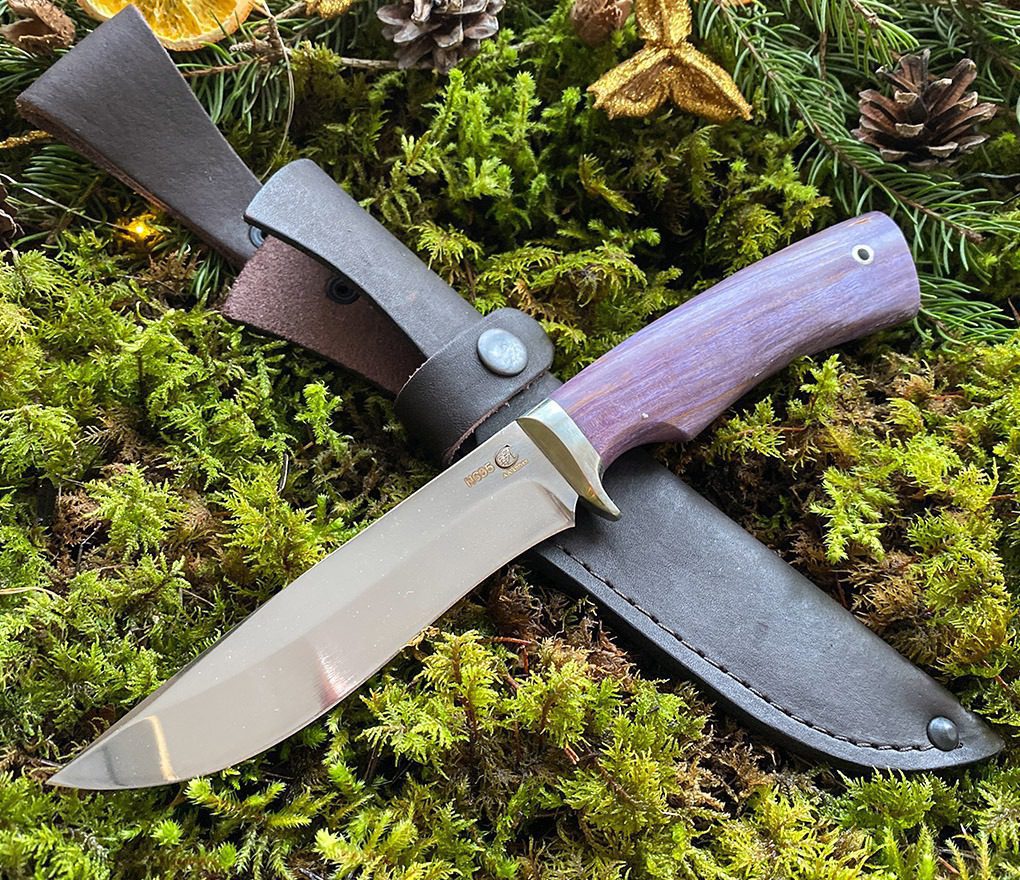
It’s important to understand: steel hardness affects how long an edge stays sharp, but not whether it will ever need sharpening. For example, the SCANDINAVIAN knife with N695 steel and 58-59 HRC hardness retains sharpness considerably longer than softer steel, but even it will eventually need full sharpening – just less often.
\n\n
What Angle to Choose
\n
The sharpening angle determines how sharp and durable the edge will be. General guidelines:
\n
- \n
- 15-17 degrees per side – Japanese kitchen knives, where maximum sharpness and clean cutting are paramount.
- 17-20 degrees per side – most European kitchen knives, a good compromise between sharpness and durability.
- 20-25 degrees per side – hunting, outdoor, and work knives, where the edge must withstand impacts, bones, and harder materials.
\n
\n
\n
\n
If you’re unsure what angle to choose for a particular model, it’s best to stick with the angle the knife already has from the factory – you can determine this by placing the edge on a stone and adjusting the angle visually until it contacts across the full width.
\n\n
Stone or Pull-Through Sharpener
\n
Pull-through sharpeners are quick and convenient, but they have one serious problem – the fixed angle often doesn’t match a particular knife’s geometry, and they tend to remove more metal than necessary. In the long run, this shortens the knife’s life.
\n
A whetstone requires more practice but gives complete control over angle and results. Starting with medium grit (around 1000), you can restore a worn edge, while a finer stone (3000-6000) polishes it to mirror smoothness. For a knife with quality steel like N695, a stone is an investment that pays off – it lets you use the full potential of the steel instead of just “leveling” the edge.
\n\n
How to Tell If a Knife Is Really Dull
\n
Some simple tests that require no special tools:
\n
- \n
- Paper test. Hold a sheet vertically and try to cut it with a light slicing motion. A sharp knife cuts cleanly; a dull one tears or catches.
- Tomato test. A sharp edge sinks into the skin without pressure. If you have to push for the knife to start cutting, it’s tired.
- Fingernail test. Place the edge on your nail at a slight angle. A sharp knife will grip the surface; a dull one will slide.
\n
\n
\n
\n
If two of three tests show poor results, it’s time to use the stone, not just the honing rod. And of course, if the work is heavy – hunting, outdoor conditions, frequent contact with bones or wood – the edge will need sharpening much more often than a kitchen knife.
\n
Regular honing, the correct angle, and good quality steel together deliver what everyone wants – a knife that stays sharp longer and requires less maintenance.
Frequently Asked Questions About Knife Sharpening
How often should knives be honed?
Kitchen knives used daily should be honed before or after each intensive use – it takes less than a minute and requires no special skills.
Why isn't a pull-through sharpener the best choice for all knives?
It has a fixed angle that often doesn't match a particular knife's edge geometry, and it tends to remove more metal than necessary, shortening the knife's lifespan.
What sharpening angle is suitable for hunting and outdoor knives?
Usually 20-25 degrees per side, as these knives need durability against harder materials and impacts more than maximum sharpness.
How can you check if a knife is dull without special tools?
You can use the paper test, tomato test, or fingernail test – if the edge catches, crumples material, or doesn't grip without pressure, it's time to sharpen.
Does high-quality steel mean a knife never needs sharpening?
No, high-quality steel with greater hardness retains sharpness longer, but eventually full sharpening will be necessary for any blade.
Knife ”SCANDINAVIAN” – Swedish Bohler-Uddeholm N695 stainless knife steel
 No products in the cart.
