


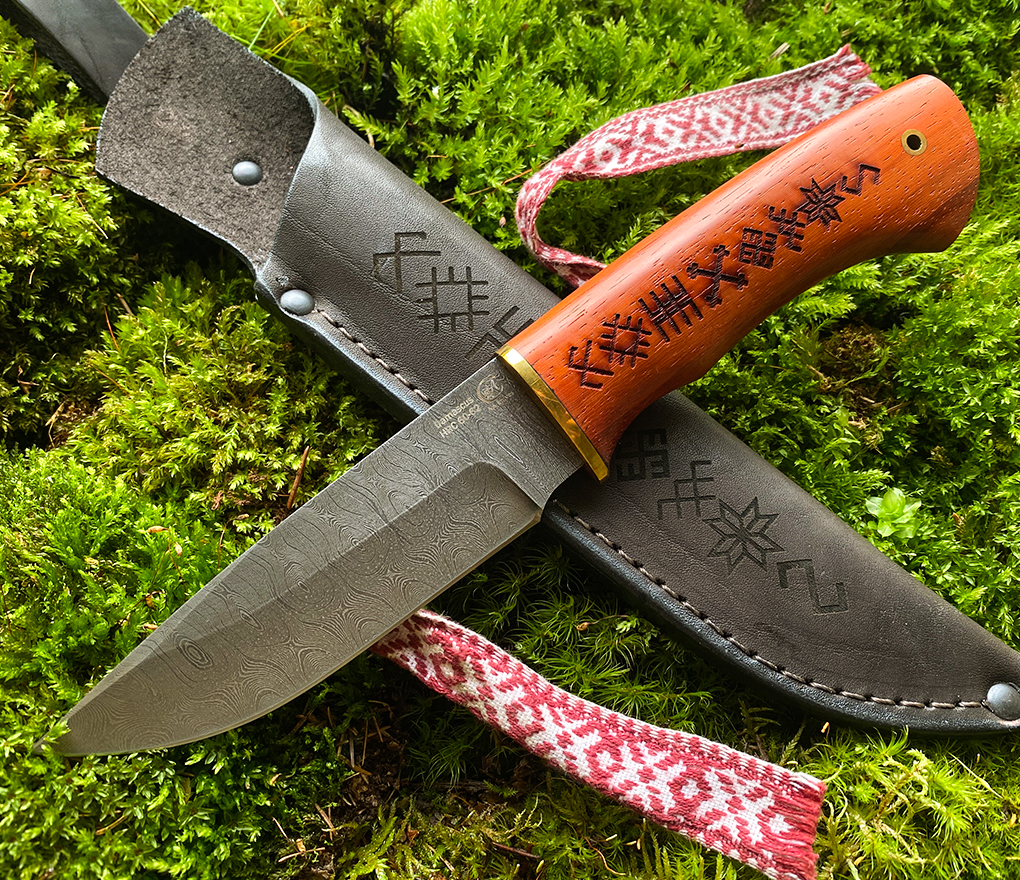
Damascus Steel Hunting Knife: How to Choose and Care for It
If you’re looking for a Damascus steel hunting knife that’s useful for both the initial processing of game and later meat cutting, it’s important to understand three things: the blade’s construction, the handle’s ergonomics, and how to care for the knife after each use. A properly chosen and maintained knife can last for many years without needing serious sharpening, whereas a neglected knife can rust or lose its edge very quickly.
What Makes the Damascus Steel Hunting Knife an Excellent Choice
Damascus steel is made by forging together several layers of steel with different hardness and viscosity. The number of these layers can reach several hundred or even thousands, and the resulting steel possesses both hardness and elasticity—two properties that typically conflict with one another. In practice, this means that the blade stays sharp for a long time, yet it is not brittle and does not crack even under intense stress. In addition, each Damascus steel blade has its own unique pattern, which forms during the forging process—which is why no two knives are ever completely identical.
What to Look for When Choosing a Hunting Knife
A hunting knife differs from a kitchen or hiking knife in how it is used in the field—often with slippery or cold hands, in poor lighting, and sometimes in snow or rain. When choosing a knife for this purpose, it is advisable to pay attention to the following points:
- Blade shape and width —a wider blade with a pronounced belly is better suited for skinning because it provides a larger contact area with the skin.
- The shape of the knife’s tip —a tapered, easy-to-control tip—reduces the risk of accidentally injuring internal organs while processing game.
- Guard (hand guard) – a crossbar between the handle and the blade protects your fingers if your hands are wet or slippery from grease.
- Handle material – a wooden handle feels warmer and more comfortable in the hand than synthetic materials, but it requires regular maintenance.
- Sheath or bag —a durable leather bag with a secure closure protects the blade during transport and prevents accidental cuts inside a bag or backpack.
Handle and guard—components that determine comfort during a long workday
Handle material
A wooden handle, such as one made of bubinga wood, develops its own patina over time and molds to the user’s hand, adapting to the way that particular user holds the knife. This is important because hunting and meat processing often require several hours of continuous work, and an uncomfortable handle causes fatigue and blisters.
Protection against finger injuries
The guard between the handle and the blade is a small but important detail—it prevents your hand from accidentally slipping onto the blade when working with greasy or wet hands. This is especially useful in hunting situations, when you can’t wash your hands properly right away.
How does a knife like this help with the initial processing of game?
The processing of game typically consists of several stages—skinning, gutting, and initial meat cutting. Each of these stages has slightly different requirements for the blade. A wider, distinctly curved blade helps with skinning, as it allows for broad, even pulling motions, while a precise, tapered tip is useful for finer cuts close to the bone or organs. Knives that combine these features, such as the Latvian “LĀČPLESIS” hunting knife, forged from Damascus steel with 800 layers, are therefore often chosen as the sole knife to accompany the entire hunting process, from the field to the table.
Knife Care and Sharpening After a Hunt
No matter how high-quality the steel is, any knife must be thoroughly cleaned and dried after coming into contact with meat, fat, and blood before being put back in its sheath. Damascus steel knives, like other high-hardness steels, are resistant to wear, but that doesn’t mean they’re completely immune to moisture. Practical care tips:
- After use, rinse the knife with clean water and dry it with a soft cloth—never leave it damp in your bag.
- It is recommended to occasionally rub natural wood oil into wooden handles to prevent them from drying out or cracking.
- To sharpen the blade, choose a fine-grit stone or a ceramic sharpener and maintain the blade’s original sharpening angle—you can determine this by observing how the edges of the blade align with the handle.
- If you won’t be using the knife for an extended period of time, store it in a dry place—ideally in the bag included with the set—to prevent accidental scratches or exposure to moisture.
Storage Between Hunting Seasons
If a knife isn’t used for an extended period of time—for example, between hunting seasons—it’s important to check it at least once every couple of months. The wooden handle can dry out if stored in a place that is too dry or too hot, so it’s best to choose a room with moderate temperature and humidity. It is recommended to check the blade for any signs of rust, and if any appear, wipe them off immediately with a soft cloth and a little oil.
A high-quality Damascus steel hunting knife is an investment that pays off year after year —not only because of its durability, but also because of how reliably it performs precisely when a sharp, precise blade is most important. Careful selection and regular maintenance are what determine whether the knife will remain your daily companion in the woods or by the water’s edge for many years to come.
Frequently Asked Questions
How often should a Damascus steel hunting knife be sharpened?
High-hardness Damascus steel retains its sharpness longer than many standard steels, so sharpening is required less frequently; however, the exact interval depends on the intensity of use and the material you are cutting. Regular, light sharpening with a fine-grit stone between uses helps prevent the need for more extensive sharpening.
Is this type of knife also suitable for fishing?
Multifunctional hunting knives with a precise, controllable blade are often useful for preparing fish catches as well, which is why they are classified into several categories, including fishing knives.
How do you properly care for a wooden handle?
Wooden handles should be dried after use and occasionally treated with natural wood oil to prevent them from losing their flexibility and cracking. Knives with wooden handles should not be left soaking in water for long periods or stored in direct sunlight.
Why does Damascus steel have such a distinct pattern on the blade?
The pattern is formed by forging together several layers of steel of varying hardness in a specific order and then reforging them several times. This process not only gives the blade a unique appearance, but also affects its strength and cutting properties.
Is it advisable to carry a knife along with a bag while hunting?
Yes, a durable sheath protects the blade from the elements and accidental scratches, and allows you to safely carry the knife attached to your belt with a loose or fixed lanyard, depending on the situation.
Latvian combat knife “LĀČPLESIS,” forged from Damascus steel, 800 layers
 No products in the cart.