

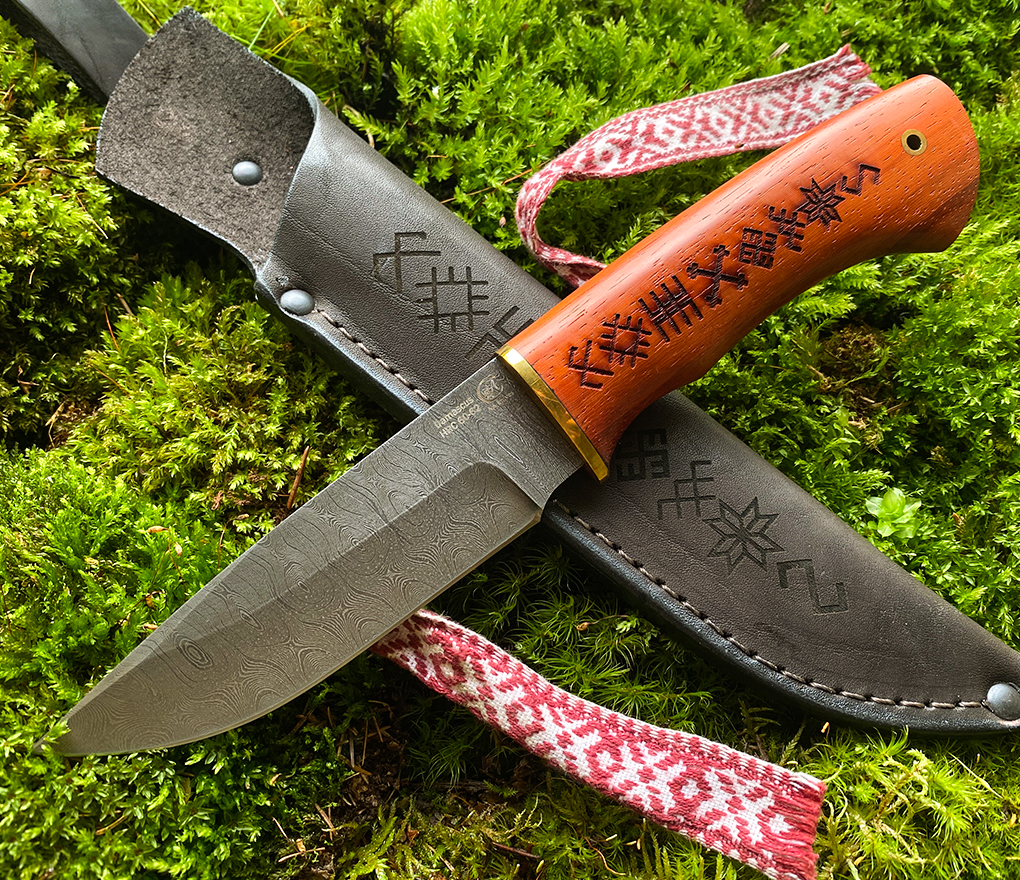
Damascus Steel Hunting Knife: How to Choose and Care for It
If you’re looking for a Damascus steel hunting knife that can handle both field dressing and later cutting up meat, the most important things to understand are three: blade construction, handle ergonomics, and how to care for the knife after every use. A well-chosen, well-maintained knife can serve for years without ever needing serious sharpening, while a neglected one can rust or lose its edge in no time.
What makes a Damascus steel hunting knife an excellent choice
Damascus steel is made by forge-welding together multiple steels with different hardness and toughness. The number of layers can run into the hundreds or even thousands, and the resulting steel combines hardness and flexibility – two qualities that usually work against each other. In practice, this means the blade holds its edge for a long time while remaining tough and resistant to chipping, even under heavy use. On top of that, every Damascus steel blade develops its own unique pattern during forging, so no two knives are ever truly identical.
What to look for when choosing a hunting knife
A hunting knife differs from a kitchen or camping knife in how it needs to perform outdoors – often in slippery or cold hands, poor light, sometimes in snow or rain. When choosing a knife for this purpose, it’s worth paying attention to the following points:
- Blade shape and width – a wider blade with a pronounced belly is better suited for skinning, since it has more contact area with the hide.
- Tip shape – a narrower, well-controlled tip reduces the risk of accidentally puncturing internal organs while field dressing game.
- Guard (bolster) – the crossbar between handle and blade protects your fingers when hands are wet or slick with fat.
- Handle material – a wood handle feels warmer and more pleasant in hand than synthetic materials, but it requires regular care.
- Sheath or pouch – a durable leather sheath with a secure closure protects the blade during transport and prevents accidental cuts inside a bag or backpack.
Handle and guard – the details that determine comfort during a long day’s work
Handle material
A wood handle, such as one made from bubinga, develops its own patina over time and molds itself to the individual grip of whoever uses it. This matters because hunting and meat processing often require hours of continuous work, and an uncomfortable handle causes fatigue and pressure marks.
Guard against finger injuries
The guard between the handle and the blade is a small but important detail – it stops your hand from slipping forward onto the blade when working with greasy or wet hands. This is especially useful in hunting situations, where thorough hand washing isn’t always immediately possible.
How this type of knife helps with field dressing game
Processing game usually involves several stages – skinning, gutting, and initial breaking down of the meat. Each stage places slightly different demands on the blade. A wider, distinctly curved blade helps with skinning, allowing for broad, even pulling motions, while a precise, narrow tip is useful for finer cuts close to bone or organs. Knives that combine both qualities, such as the Latvian power knife ”LACHPLESIS”, forged Damascus steel, 800 layers, are therefore often chosen as the single knife that handles the entire process from field to table.
Knife care and sharpening after a hunt
No matter how good the steel is, any knife that has come into contact with meat, fat, and blood needs to be thoroughly cleaned and dried before going back into its sheath. Damascus steel knives, like other high-hardness steels, are resistant to wear, but that doesn’t mean they’re immune to moisture. Practical care steps:
- After use, rinse the knife with clean water and dry it with a soft cloth – never store it wet in a bag.
- It’s a good idea to occasionally treat a wood handle with natural wood oil so it doesn’t dry out or crack.
- For sharpening, choose a fine whetstone or ceramic sharpener and follow the blade’s original sharpening angle – you can judge this by observing how the edge lines up against the handle.
- If you won’t be using the knife for a while, store it in a dry place, ideally in its included sheath, to avoid accidental scratches or exposure to moisture.
Storage between hunting seasons
If a knife goes unused for an extended period, say between hunting seasons, it’s important to check it at least every couple of months. A wood handle can dry out if stored somewhere too dry or too warm, so choose a room with moderate temperature and humidity instead. Check the blade for any signs of rust, and if any appear, remove them right away with a soft cloth and a bit of oil.
A quality Damascus steel hunting knife is an investment that pays off year after year – not just through its durability, but through how reliably it performs in exactly the moments when a precise, sharp blade matters most. Careful selection and regular care are what determine whether a knife remains your trusted companion in the woods or by the water for many years to come.
Frequently Asked Questions
How often should you sharpen a Damascus steel hunting knife?
High-hardness Damascus steel holds an edge longer than many standard steels, so it needs sharpening less often, though the exact interval depends on how intensively you use it and what you're cutting. Regularly touching up the edge with a fine whetstone between uses helps avoid the need for heavier sharpening later.
Is this type of knife also suitable for fishing?
Multi-purpose hunting knives with a precise, controllable tip often work well for preparing a catch too, which is why they're sometimes listed across several categories, including fishing knives.
How do you properly care for a wood handle?
After use, dry a wood handle and occasionally treat it with natural wood oil so it doesn't lose flexibility or crack. A knife with a wood handle shouldn't be soaked in water for long periods or stored in direct sunlight.
Why does Damascus steel have such a distinctive pattern on the blade?
The pattern forms by forge-welding together several layers of steel with different hardness in a specific sequence, then re-forging them multiple times. This process not only gives the blade its unique look but also affects its durability and cutting properties.
Is it a good idea to carry the knife with its sheath while hunting?
Yes, a durable sheath protects the blade from the elements and accidental scratches, and lets you carry the knife securely attached to your belt with a loose or fixed loop, depending on the situation.
Latvian power knife ”LACHPLESIS”, forged Damascus steel, 800 layers
 No products in the cart.