


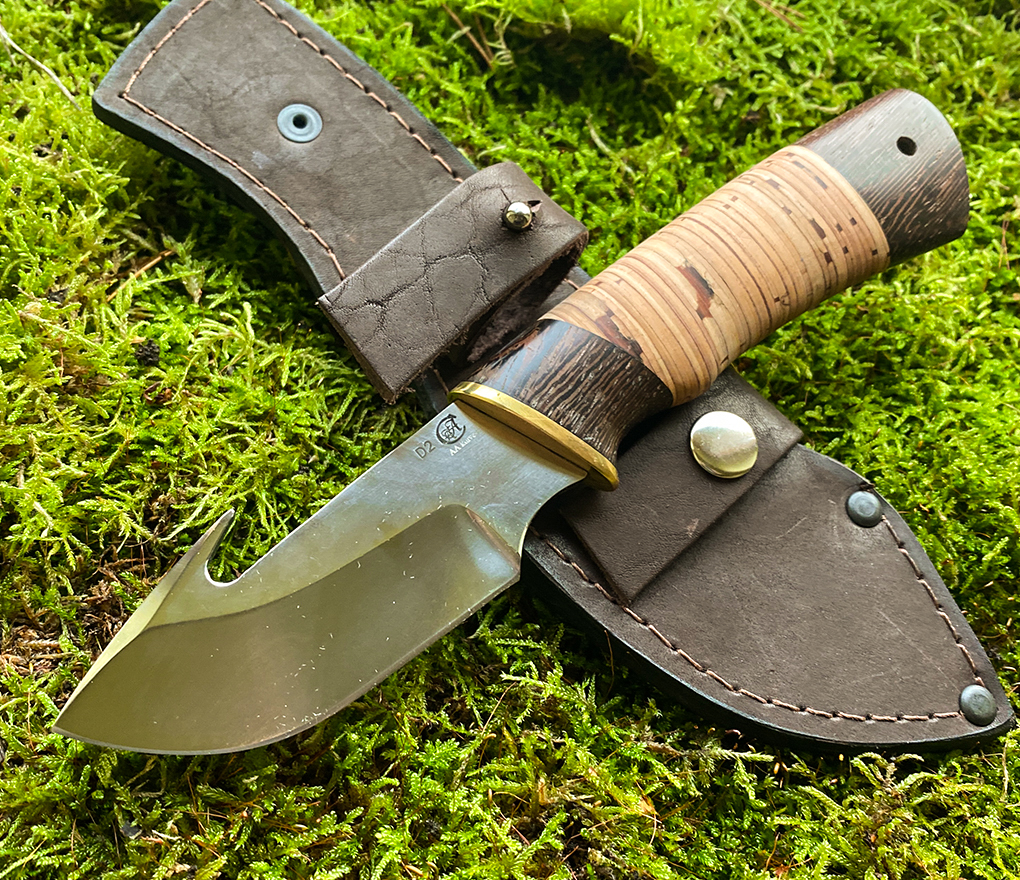
7 Mistakes to Avoid When Buying D2 Steel Knives
D2 steel has become one of the most popular materials for hunting, camping, and full-tang knives, and for good reason—it holds an edge well and resists wear. However, this very reputation leads buyers to make decisions based on half-truths. Below are the most common mistakes and how to avoid them.
1. Treating D2 as a stainless steel
D2 is often sold labeled as ‘semi-stainless’ or even simply called stainless because its chromium content approaches the stainless steel threshold, but doesn’t quite meet it. In practice, this means the blade will rust, especially if left in a damp environment in a pocket or bag after use. Buyers expecting VG10 or H1 level corrosion resistance are disappointed. The right approach—wipe the blade dry after each use and avoid storing it in a damp sheath for extended periods.
2. Overlook the heat treatment
Two knives made from the same steel grade can perform very differently because final hardness and edge quality depend entirely on heat treatment. Buyers often focus only on the steel name and ignore the stated HRC value, which is actually more important than the steel grade itself. Before purchasing, always check the manufacturer’s specifications for hardness—this gives you a real picture of how the edge will perform.
3. Sharpen D2 the same way as softer steels
D2 is a high-chromium, high-carbon steel that makes it durable but also harder to sharpen than, for example, standard carbon steel. People accustomed to simple kitchen knives often lose patience and apply excessive pressure, damaging the edge or even breaking small chips off. Better to choose a whetstone with finer grit for the initial work and move slowly with a consistent angle, rather than trying to ‘quickly sharpen’ as usual.
4. Buy a large, heavy knife for small daily tasks
D2 steel knives are often designed as full-tang, robust tools with thick edges—excellent for hunting or firewood preparation, but awkward for delicate kitchen work. For example, a knife with a 41 mm blade width and 3 mm thickness is meant for heavy work, not fish filleting. When choosing a knife, first consider what you’ll use it for most often, then decide on material and size.
5. Ignore the handle material and its maintenance
Almost all attention goes to the blade, yet the handle determines how comfortable and safe the knife is to use over long periods. Wooden handles, such as wenge or birch, can dry out and crack over time if not treated with oil. Many discover this only after the first winter when the handle starts losing its appearance. Regular oiling of the wooden handle every few months preserves its look and prevents cracks.
6. Store the knife in the wrong sheath or pocket
Many buyers choose cheap solutions—loose pouches or plastic cases that don’t let the blade ‘breathe’ and encourage moisture buildup. For D2 steel, as mentioned earlier, this is exactly what to avoid. A knife like Knife ”HOOK” – Swedish Bohler-Uddeholm hand forged D2 steel knife typically comes with an appropriate sheath, but check it from time to time and air it out rather than just forgetting it after purchase.
7. Fail to learn local laws on knife class and blade length
Before buying, people often focus only on technical specs and suitability for a specific task, forgetting about regulations on blade length, type, or carrying a knife in public. These rules vary by country and can change. Always check local regulations before choosing a specific model for hunting, camping, or daily carry.
A D2 steel knife can serve you for years if its selection and care match your real needs, not just the steel’s reputation. Time spent choosing the right size, understanding care requirements, and checking local regulations pays off with a knife that won’t fail when you need it most.
Frequently Asked Questions
Does D2 steel rust?
D2 steel is not fully stainless because its chromium content falls slightly below the stainless steel threshold. It can rust if left in damp conditions, so it's recommended to wipe the blade dry after use.
How do you sharpen a D2 steel knife properly?
D2 steel is harder than many other knife steels, so sharpening requires more time and consistent, unhurried pressure. Use a whetstone with finer grit and maintain a constant angle.
What is a D2 steel full-tang knife suited for?
These knives are well-suited for hunting, camping, and heavy work because they are durable and hold an edge for a long time. Thinner, smaller knives are better for delicate kitchen tasks.
How do you care for wooden handles in winter and summer?
Apply natural oil regularly to wooden handles to prevent drying and cracking, especially in conditions with temperature and humidity fluctuations.
What should you know about carrying a knife in public?
Regulations on blade length and knife carrying vary by country, so always check local laws before purchasing and using a knife for hunting, camping, or daily carry.
Knife ”HOOK” – Swedish Bohler-Uddeholm hand forged D2 steel knife
 No products in the cart.