


Learn to Understand Steel Hardness Before Your Next Knife Purchase
Before buying a knife, most people look at appearance and price. However, the properties of the steel determine how long the edge will stay sharp, how easily it breaks, and how much time maintenance will require. Below are six factors that truly affect how your knife performs in use—without complex metallurgy, just practical language.
1. Understand What the HRC Scale Means
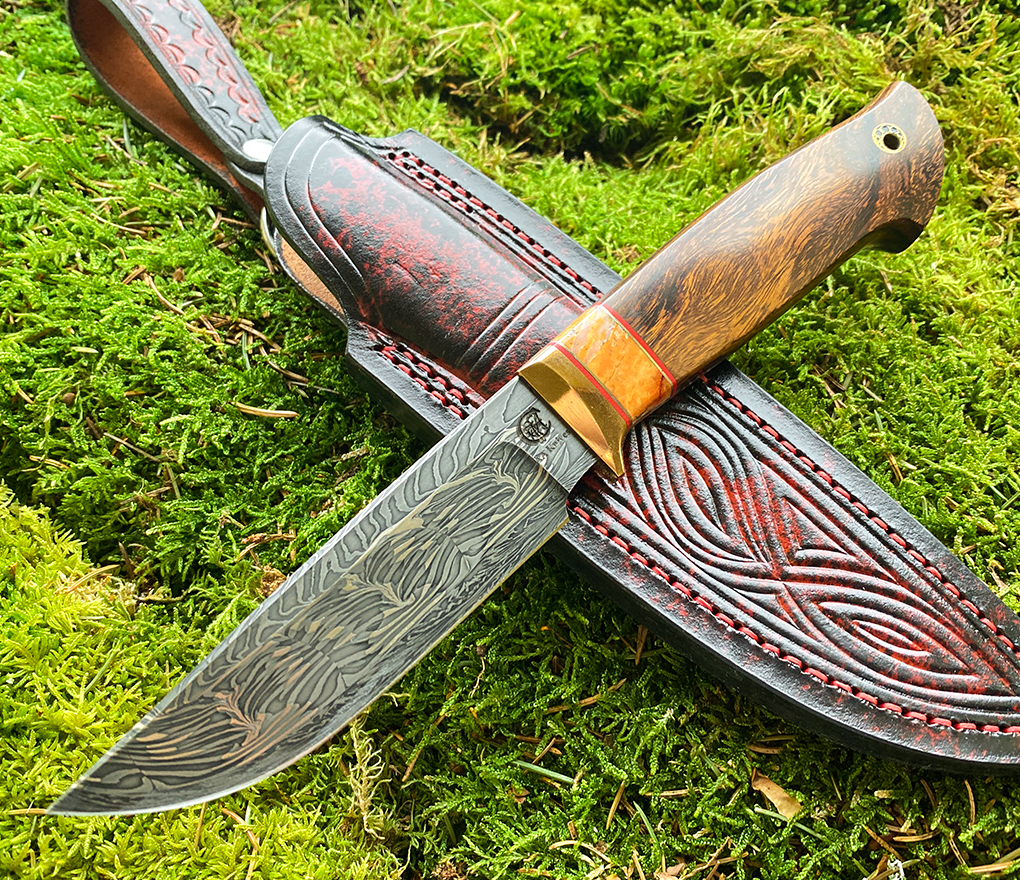
HRC (Rockwell hardness scale) shows how resistant steel is to mechanical deformation. The higher the number, the harder the metal and the longer the edge stays sharp. For example, steel with a hardness of 60-62 HRC—as used in the hand-forged Mosaic Damascus blade of the Knife “MAGNUM”, forged Mosaic Damascus steel knife, handle from stabilized Mammoth tusk model—maintains sharpness considerably longer than softer 54-56 HRC steel. However, hardness is not the only indicator worth considering—it must be weighed against durability.
2. Evaluate the Hardness-to-Durability Ratio
Harder steel is more brittle. This means a high-hardness edge holds sharpness well, but can break or chip if subjected to impact or leverage force, such as using it as a pry bar or chopping through bone. Softer steel is more flexible and better withstands impacts, but the edge dulls faster. When choosing a knife, understand which action will be performed most often—fine, precise cutting or heavy, forceful work.
3. Distinguish Between Stainless and Carbon Steel
Stainless steel contains chromium, which forms a protective layer against oxidation. This is advantageous in wet environments or kitchens where the knife frequently contacts water and food acids. Carbon steel is typically harder and holds an edge better, but it rusts if not dried and oiled after each use. Damascus steel, made by layering and forging multiple sheets of different composition metals, often combines the benefits of both types, but it also requires regular maintenance so the characteristic pattern and sharpness are preserved.
4. Compare Edge Retention Across Different Steels
Edge retention shows how long a blade stays sharp until the next sharpening. High-hardness steels and those with high chromium or vanadium content win in this regard, but they are more complex to restore in home conditions. If a knife is used infrequently but regularly—for example, for hunting or hiking—high edge retention means less time spent sharpening in field conditions and more time for the actual work.
5. Consider Sharpening Ease
Not everyone likes or has time to frequently sharpen complex blades. Softer, lower-hardness steels sharpen quickly with simple tools—a stone or ceramic rod. High-hardness and multi-layered steels, including hand-forged damascus, require greater precision and often professional sharpening experience to avoid damaging the blade structure. If you plan to maintain your knife at home, assess whether you are willing to invest time in learning the skills or prefer a simpler maintenance routine.
6. Consider Your Use Environment and Purpose
For a kitchen knife used daily and washed and dried, stainless steel is a more practical solution. For a hunting or bushcraft knife working in the forest, in moisture and various weather conditions, resistance to impacts and the ability to maintain sharpness for longer without access to sharpening tools may be more important. For collection pieces, where the main value is craftsmanship and unique pattern, the practical load is smaller, so emphasis shifts to aesthetics and material quality—yet even then, steel hardness and proper maintenance determine how long the knife stays in pristine condition. Regardless of where you live, always check local regulations regarding blade length and transportation, as they can vary significantly.
7. Do Not Look at Just One Number
An HRC value without context tells surprisingly little. The same hardness rating in two different steels can produce different results, because the effect also comes from alloying elements, forging process, and blade heat treatment. Hand-forged Damascus steel, where multiple layers are forged and folded together, often shows better balance between hardness and durability than single-composition steel with an identical HRC number. Therefore, when choosing a knife, it is worth looking at the complete specification—blade material, thickness, width, and handle construction—rather than just one indicator.
Frequently Asked Questions
What hardness is considered good for a knife edge?
A hardness of 58-62 HRC typically provides good edge retention while maintaining sufficient durability against breakage if the steel is well-processed.
Why does carbon steel rust more than stainless steel?
Carbon steel lacks the high chromium content that forms a protective layer. Therefore, it must be dried after each use and coated with oil.
Is Damascus steel better than regular alloy steel?
Damascus steel often combines the advantages of multiple metal layers, but its quality largely depends on the craftsman's skill and the forging process, not just the material name.
How often should a hunting knife be sharpened?
This depends on usage intensity and steel hardness, but generally it is recommended to check the edge condition after each intensive outing and sharpen as needed.
Should collection knives also be maintained regularly?
Yes, even rarely used or display knives require periodic maintenance—cleaning, drying, and light oiling—so the steel and handle material do not lose quality.
Knife “MAGNUM”, forged Mosaic Damascus steel knife, handle from stabilized Mammoth tusk
 No products in the cart.