


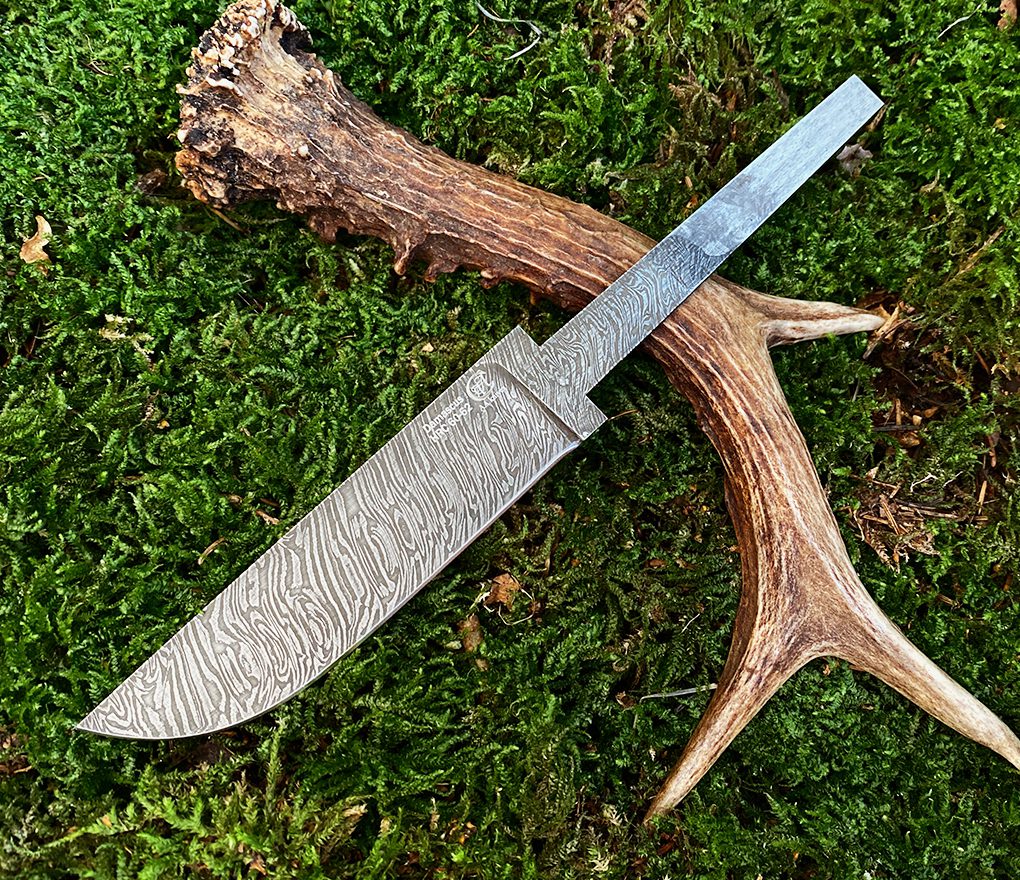
Damascus Steel Blade “GRAF” – What the Pattern Reveals About Forged Steel
The Damascus blade pattern looks like water ripples or tree rings, and that’s no accident – it’s proof of hundreds of forges worked by hand. To understand why such blades command their price and why they cut the way they do, it’s worth looking at what actually happens in a blacksmith’s workshop before the steel becomes a knife.
What Damascus Steel Really Is
Damascus steel is a combination of several different steel layers fused into a single blade plate. A blacksmith selects at least two steels with different properties – one harder, one more flexible – and arranges them in a package in a specific sequence. This package is heated and forged together, creating the foundation from which the blade will later emerge. The resulting material combines the best properties of both steels: the hardness that holds an edge, and the flexibility that prevents the blade from breaking under stress.
Why the Blade Has So Many Layers
The layer count comes from a repeated forging process, where the steel plate is folded, compressed, and stretched again. With each cycle, the layer count doubles – from a few dozen, they can reach several hundred. For example, the GRAF blade has 450–600 layers, created from a package of ShH15, HVG, and U10A steels. The more layers, the finer and more uniform the steel’s internal structure becomes, which directly affects blade durability and how long it will hold an edge.
How the Blacksmith Achieves the Unique Pattern
The pattern on the blade surface comes from the layering and folding process itself, not applied afterward. Once the plate is forged and cut to the required shape, the master treats it with acid, which etches different steels at different intensities. As a result, contrasting lines and waves appear on the surface – each blade ends up visually unique because no two forgings happen identically. This step transforms a technical material into artwork that you can hold in your hand and use daily.
Why This Process Requires So Much Manual Work
Automating Damascus steel forging is practically impossible because each hammer blow and every folding movement affects the next layer arrangement. The master must feel the metal – when it’s hot enough to fold, when to stop the process to avoid damaging the structure. The heat treatment, which for the GRAF blade occurs around 860°C, is when the steel achieves its final hardness – in this case, 60–62 HRC. Such hardness means the edge holds sharpness for a long time, but also requires a precise cooling regime so the steel doesn’t become brittle.
Is Damascus Steel Blade Just for Beauty, or Is It Practical?
The multi-layered structure isn’t just an aesthetic effect – it actually improves cutting properties and blade resistance to microscopic damage. The harder steel in the package provides a sharp cutting edge, while the more flexible layer absorbs impacts that might otherwise cause cracks. That’s why Damascus steel blade “GRAF” – forged Damascus steel, 450 – 600 layers is an example of how crafting tradition and practical use can exist together – a blade that looks like a work of art but works as a tool. The 118 mm long and 3 mm thick blade with a 26 mm widest point is designed to handle both fine cutting and frequent use.
How to Distinguish a Quality Forged Damascus Blade from a Superficial Imitation
In a genuine forged Damascus steel blade, the pattern runs through the entire blade thickness, not just remaining on the surface like a print or an etched pattern on regular steel. When you run your finger along the blade’s side, you can often feel a slight texture – the layer boundaries created by the forging process. Another sign is the weight and balance in hand: forged multi-layered steel is usually denser and better balanced than cast or milled alternatives. If the seller can provide the exact layer count and the steel composition in the package, it indicates that the manufacturer knows their product and the process is documented, not made up for marketing purposes.
How to Care for a Damascus Blade to Preserve Pattern and Sharpness
After each use, the blade should be dried completely, as high-hardness steel with pronounced layering can be more sensitive to moisture between layers. Regular light oiling – especially if the knife isn’t used every day – helps preserve both the blade’s condition and the pattern’s contrast. For sharpening, use fine stones and maintain the original cutting angle, as overly aggressive sharpening can fade part of the layer pattern right at the cutting edge. For storage, choose a dry location without temperature fluctuations – in accordance with local regulations on knife storage and transportation, which are worth checking in each country separately.
A Damascus steel knife isn’t something you buy in a hurry – it’s the result of a process where every step demands experience and patience. Knowing what happens behind the pattern makes it easier to appreciate why such a blade lasts long and why it looks even more interesting with each use.
Frequently Asked Questions
Is a Damascus steel blade more durable than regular steel?
The multi-layer structure combines hard and flexible steels, so the blade better withstands stress and holds sharpness longer than homogeneous steel.
How does the pattern on a Damascus blade form?
The pattern forms during forging and folding, when multiple steel layers are combined, and appears after acid etching.
Can a Damascus blade be sharpened like a regular knife?
Yes, but it's recommended to use fine sharpening stones and maintain the original cutting angle to avoid damaging the layer pattern at the edge.
How should I store a Damascus steel knife to maintain quality?
Keep it dry, oil it regularly, and store it in a place without temperature fluctuations, following local regulations on knife storage.
Damascus steel blade “GRAF” – forged Damascus steel, 450 – 600 layers
 No products in the cart.
