


A Forgotten Knife in the Garage is Not a Lost Knife
Grandfather’s knife has been lying in a garage drawer for years alongside screws and straps. The blade edge shows a band of rust, the handle splinters when held, and the tip was broken off at some point years ago. Now the knife needs to go hunting, but first it must be put in order.
A forgotten knife is not a lost knife. Most damage can be corrected at home with basic tools and patience, but there is a line beyond which it is better to trust a sharpener or professional. Below is how to recognize where that line is.
Surface Rust: Clean, Not Hidden
If rust is only on the surface and does not form deep pits, it can be removed by hand. Fine abrasive works best – either a special paste or regular baking soda mixed with water to a thick consistency. Apply it to a cloth or cork piece and rub the rusty area in one direction, not in circles. After cleaning, rinse the blade, dry it thoroughly, and immediately coat it with a thin layer of oil – otherwise rust will return faster than expected.
If rust has penetrated deeper and formed pits in the steel, aggressive rubbing will only make things worse. In such cases, it is better to consult a professional who can assess whether the pits affect the blade structure and whether there is a risk of the metal breaking under load.
Dull Blade: Sharpening is a Skill, Not a Quick Fix
A dull knife means more than inconvenience in the kitchen – it means greater effort when cutting and thus greater injury risk, as your hand slips and pressure becomes uncontrolled. Basic sharpening with a stone or ceramic rod can be learned: the most important thing is to maintain a stable angle throughout the process and work evenly, without rushing.
However, if the blade is heavily worn, if the edge is uneven, or if the knife steel is very hard – for example, hand-forged blades with hardness above 60 HRC – amateur sharpening without experience can irreversibly damage the profile. In such cases, it is better to entrust the work to a master with professional equipment who will preserve the blade’s original geometry.
How to Check How Dull Your Knife Really Is
- Try to lightly cut through a sheet of paper without holding it – if the knife catches rather than slides, it’s dull.
- Hold the edge against the light – shiny, unsharp spots indicate a worn cutting corner.
- Gently drag your fingernail across the edge sideways – a sharp edge will slightly “catch,” while a dull one will slide smoothly.
Loose Handle: Do Not Secure With Tape
A loose handle is one of the most common damages, and it is often ignored until one day the knife splits in your hands at the worst possible moment. If the handle is wooden and attached with rivets, do not tighten the rivets with a hammer – this can crack the material. Check whether the problem is dried-out wood (then special wood oil helps, which causes fibers to swell) or a loose fastening system that needs new epoxy glue or a rivet.
If the handle is made of multiple material layers or has a complex construction with embedded elements, it is better not to risk a DIY repair and take it to a professional – improper repairs can make the handle even weaker than it originally was.
Broken Tip: When Geometry Must Be Changed Professionally
A broken or chipped blade tip is the most difficult damage to repair. A minor defect where a few millimeters of metal are missing can sometimes be ground to form a new, slightly shorter tip – but this changes the proportions of the entire blade and can affect balance. This work requires experience and proper cooling during grinding to avoid damaging the steel structure through overheating.
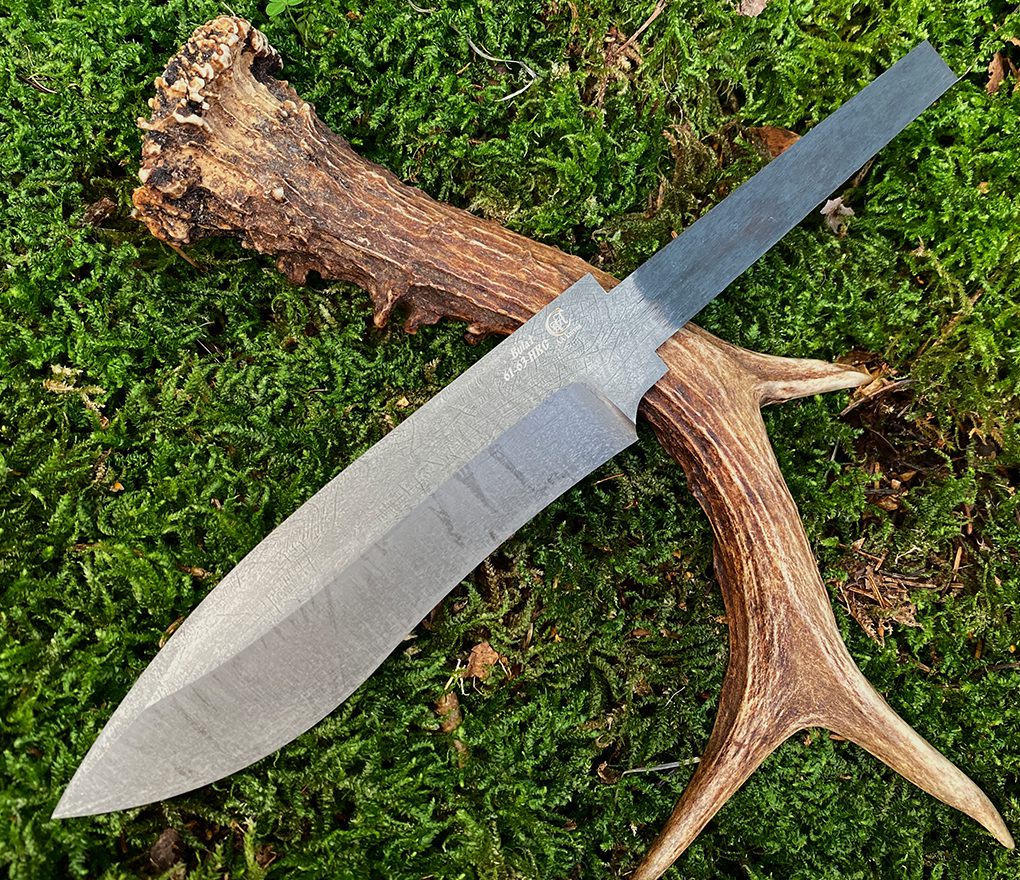
If the knife is hand-forged, with an individual pattern on the surface or made from a material whose properties depend on a specific forging technique, it is better to entrust it to a blacksmith or blade master rather than attempting to fix it yourself with a grinder. Such a knife, for example, Blade “BEAR”-hand forged Bulat – Wootz steel, is created with specific heat treatment, and improper interference can irreversibly change its properties.
When to Definitely Visit a Professional
- Rust has penetrated deeply and forms pits or cracks.
- The blade is very hard, hand-forged, or made of complex steel structure.
- The handle consists of multiple materials or has a complex fastening system.
- Part of the blade tip is missing or visible cracks in the steel body.
Regular Maintenance Prevents Most Problems
Most of these damages occur not from use, but from neglect. A knife that is wiped dry after each use and treated with a thin layer of oil every couple of months rarely develops deep rust or a dried-out handle. Check your knife collection once a season – a small time investment now saves hours of work and possibly the knife itself in the future. In any case, remember that different countries have different regulations regarding knife storage and transport, so always check local laws.
Frequently Asked Questions
Can rust be removed without special tools?
Yes, surface rust can often be removed with a paste of baking soda and water, rubbing in one direction with a soft cloth. Deeper rust is best left to a professional.
How do I know when I can't sharpen a knife myself?
If the blade edge is very uneven, if the steel is particularly hard (such as hand-forged blades), or if previous sharpening attempts have altered the edge profile, it's better to consult a professional sharpener with proper equipment.
Can I fix a loose handle at home?
A simple wooden handle that has dried out can often be restored with special wood oil that causes fibers to swell. Complex constructions or multi-layer handles are better left to a professional.
What should I do if a knife tip is broken?
Minor defects can sometimes be fixed by re-grinding a new tip, but this changes the blade proportions and requires experience. For hand-forged or specialty steel blades, this work is best entrusted to a professional.
How often should I maintain my knife to avoid such damage?
It's sufficient to wipe the knife dry after each use and coat it with a thin layer of oil every couple of months. Once a season, it's worth examining your entire collection more carefully.
Blade “BEAR”-hand forged Bulat – Wootz steel
 No products in the cart.
