How to Choose a Knife as a Gift Without Damaging Relationships
A knife as a gift is a risky move. On one hand, it’s a tool that serves for years and daily reminds one of the giver. On the other—many still hear their mother’s or grandmother’s warning: you mustn’t give sharp objects because it will “cut off the friendship.” To ensure the gift pleases rather than creates awkwardness, it’s worth understanding both the practical side of selection and how to avoid offense even if the recipient believes in old superstitions.
\n\n
What the knife is for—this determines everything
\n\n
Before thinking about design or price, answer one question: what will this person do with this knife in the first week after receiving it? If the answer is unclear, the gift will likely end up in a drawer.
\n\n
- \n
- For a hunter or fisherman you need a blade that withstands moisture, bone and blood, without losing its edge after each use. Here the steel composition matters, not just appearance.
- For a hiker and trail enthusiast a compact, durable model works well, one that withstands rough handling and changing weather without rusting.
- For a kitchen enthusiast ergonomics and blade geometry are key, not fancy forging details.
- For a collector origin, craftsmanship and material combination matter more, as this knife may never see practical work.
\n
\n
\n
\n
\n\n
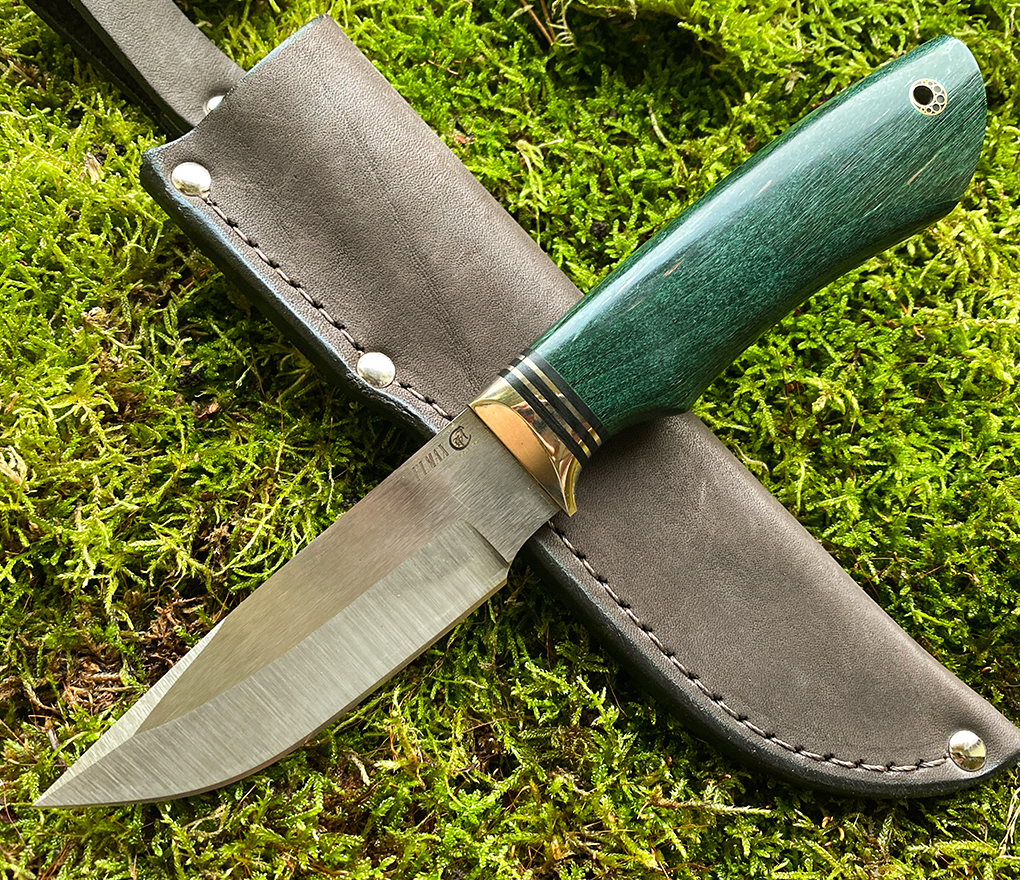
If the recipient hunts or fishes and wants a blade that holds its edge for a long time and requires minimal maintenance, attention can be paid to a model with high-quality powder steel—for example, Knife ”POSEIDON” – hand forged Swedish Steel Uddeholm ”Elmax” SuperClean, whose blade material is corrosion-resistant and suitable for heavy field work.
\n\n
Steel and handle material—what this means to the recipient
\n\n
You don’t need to turn the gift into a metallurgy lecture, but a few facts will help you choose correctly. Steel with high chromium and vanadium content better resists rust and wear—meaning less frequent sharpening and less risk of the knife being damaged if the recipient doesn’t store it in ideal conditions. Handle material, in turn, affects how comfortable it is to hold the knife in wet or cold hands. Stabilized wood, for instance, looks natural and warm, but is treated to resist moisture absorption and deformation over time—this is a good compromise between aesthetics and practicality.
\n\n
If you don’t know what steel the recipient already owns, it’s safer to choose something different from their existing collection—this way the gift complements rather than duplicates what’s already on the shelf.
\n\n
Presentation: how to give so the gift feels like a gift
\n\n
A knife handed over from a plastic bag loses half its value regardless of how good the blade is. Most quality knives come with a sheath or wooden box—use it. If packaging isn’t included, consider a simple cloth bag or wooden box; this shows attention to detail.
\n\n
A second practical step—when presenting the knife, briefly explain why you chose this particular model. “I knew you needed something that withstands moisture by the lake” sounds more personal than silently handing over a gift bag. It also reduces awkwardness if the recipient is superstitious—seeing that the gift was thoughtful, few will interpret it as a threat.
\n\n
The old superstition’s origins and how to address it
\n\n
The belief that a sharp object “cuts” a relationship is rooted in ancient superstition that a blade symbolically severs the bond between giver and recipient. Versions vary—in some places it was said friendship would end, in others that ties with a loved one would be broken. Regardless of its origin, the solution for centuries has been simple and practical: the recipient gives the giver a symbolic coin or small sum in return. This way the gift formally becomes a purchase, and the superstition loses its power.
\n\n
If you know the recipient believes in such things, prepare a small coin in advance and present it along with the knife—you can even turn it into a playful ritual that makes the gift even more memorable. For those who don’t find superstitions important, this step is simply a nice touch that costs nothing but can prevent an awkward moment.
\n\n
Practical tips before purchasing
\n\n
- \n
- Check that the blade length and shape match the intended use—a long hunting knife is not convenient in the kitchen, and vice versa.
- Consider whether the recipient prefers a classic, practical look or will appreciate handcrafted details and unique design.
- Remember that transporting and carrying sharp objects is regulated by local laws—always check local regulations before traveling with a gift.
- If the recipient is already an experienced knife user, don’t hesitate to ask mutual acquaintances what steel or brand is missing from their collection.
\n
\n
\n
\n
\n\n
A well-chosen knife is not a last-minute impulse purchase—it requires a little research about the person you’re giving it to. But that’s precisely why this gift is remembered longer than most others—every time the recipient picks it up, they also remember the giver.
Knife ”POSEIDON” – hand forged Swedish Steel Uddeholm ”Elmax” SuperClean