


6 Steps That Determine Knife Choice in the Field, Not the Kitchen
A kitchen knife knows only cutting boards, vegetables, and dry hands. In the field, the situation is different—a knife falls in sand, gets soaked in rain, cuts through pine needles, and sometimes must work for hours without interruption. That’s why requirements that are critical in hunting or hiking never appear in the kitchen. This guide shows six steps that determine whether a knife is suited for the field or will stay in a drawer.
1. Blade Shape Before Technical Specifications
Before thinking about steel, look at the blade’s silhouette. In the field, you more often need a versatile drop-point blade—it allows you to cut, pierce, and split small wood. A narrow, long fillet knife is helpless here because it breaks or bends under the slightest sideways pressure. In hunting situations, the blade tip is also critical—it must be strong enough not to break when processing game or opening packaging with cold hands.
2. Steel Properties That Work in Cold and Moisture
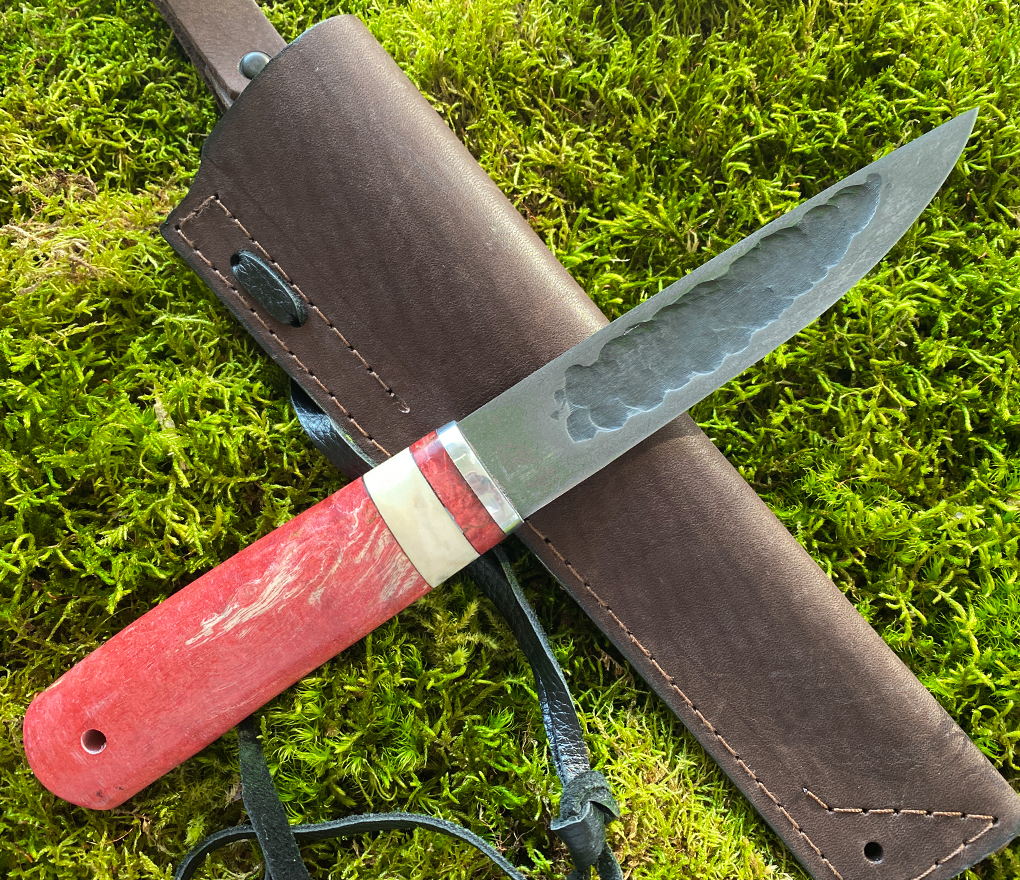
In the kitchen, steel encounters warm food and immediate washing. In the field, it stays wet and cold for hours, often without a chance to wipe it right away. Here, the blade’s ability to retain sharpness for long periods and not become brittle is decisive—because in the field, sharpening often has neither time nor suitable tools. For example, Hunting knife – YAKUT – hand forged Bulat-Wootz steel blade knife for right hand uses hand-forged Bulat-Wootz steel, which is characterized by high hardness combined with elasticity—such a combination reduces the risk of the blade breaking in cold weather or bending when cutting against bone.
3. A Handle That Maintains Grip in Wet Hands
A kitchen knife is held by a dry hand at a clean table. In hunting or fishing, the hand is often wet, cold, or gloved. The handle must be one that doesn’t become slippery—natural materials with texture, such as stabilized birch, work better here than smooth plastic or mirror-polished metal handles. Test the grip with a wet palm, not just in the store with a dry hand.
4. Tasks That a Kitchen Knife Is Never Meant For
- Wood splitting and batoning: the blade is struck with a branch or stone on its spine—only a sufficiently thick and strong blade will withstand this.
- Game processing: requires controlled, precise movement to separate skin and tissue, often in cold and wet conditions.
- Fishing work: fish cleaning demands a sharp blade resistant to fish oil and water, one that doesn’t lose its edge after several fish in a row.
- Camping and outdoor chores: cutting rope, fixing straps, foraging mushrooms—all with one tool, without the ability to grab another knife from a drawer.
5. Maintenance in the Field—Without a Sink and Dish Towel
After each day in the field, the knife must be dried before it goes into the sheath—moisture in the sheath is the most common cause of rust. If working with game or fish, wipe the blade dry immediately after use, not in the evening in the tent. Take a sharpening stone or pocket strop on any longer expedition—in field conditions, the blade quickly loses sharpness when encountering sand, bones, and tree sap. After returning home, lightly oil the blade, especially if it’s carbon or alloy steel, which is more rust-prone than stainless.
6. Sheath and Transport—Safety While Moving
In the kitchen, a knife rests in a drawer. In the field, it travels at the belt, in a backpack, or in a boot—and it must be in a secure sheath that keeps the blade in place even while walking over uneven terrain. Check that the sheath holds the knife firmly so it won’t fall out when climbing or crouching. At the same time, the sheath should be designed so you can draw the knife quickly and in one motion—in a situation where your hands are occupied or cold weather makes precision difficult.
What to Remember When Choosing a Knife for the Field
A field knife must withstand moisture, cold, impact, and prolonged use without immediate maintenance. This means a stronger blade, a more secure handle, and a more practical sheath than any kitchen model. Before purchasing, always check local regulations on blade length and transport—they vary by country and even region.
Frequently Asked Questions
What blade shape is best for hunting and hiking?
A universal drop-point blade is the best choice because it allows you to cut, pierce, and perform fine splitting work without losing tip strength.
Why should a field knife be dried before putting it in the sheath?
Moisture that remains in the sheath is one of the most common causes of rust—especially for carbon and alloy steels, which are more prone to corrosion.
Can a kitchen knife be used on hikes?
Yes, but it won't be suitable for heavier tasks like splitting wood or processing game, since its blade and handle are not designed for such stress.
What should you check when choosing a sheath for field conditions?
The sheath material must secure the blade safely even during movement, but also allow you to draw the knife quickly—both properties are equally important.
Hunting knife – YAKUT – hand forged Bulat-Wootz steel blade knife for right hand
 No products in the cart.