


5 Safety Habits for Knife Use at Home and in the Workshop
Most accidents with a knife at home happen not because the blade is too sharp, but because something fundamental isn’t right—an unstable cutting surface, a slippery handle, or haste when passing the knife to someone else. These habits apply equally to a kitchen cutting board as to a hunting or hiking knife used in a workshop—the principle is the same.
1. Grip adapted to the task, not the other way around
Many people hold a knife the same way regardless of what they’re doing—that’s the first step toward injury. For delicate work, such as chopping vegetables or separating meat from bone, the so-called “pinch” grip works best—the index finger and thumb hold the blade base near the guard, while the other fingers wrap around the handle. For heavier work requiring force, the handle should be held in a full fist, but fingers must never be in the blade’s path of movement.
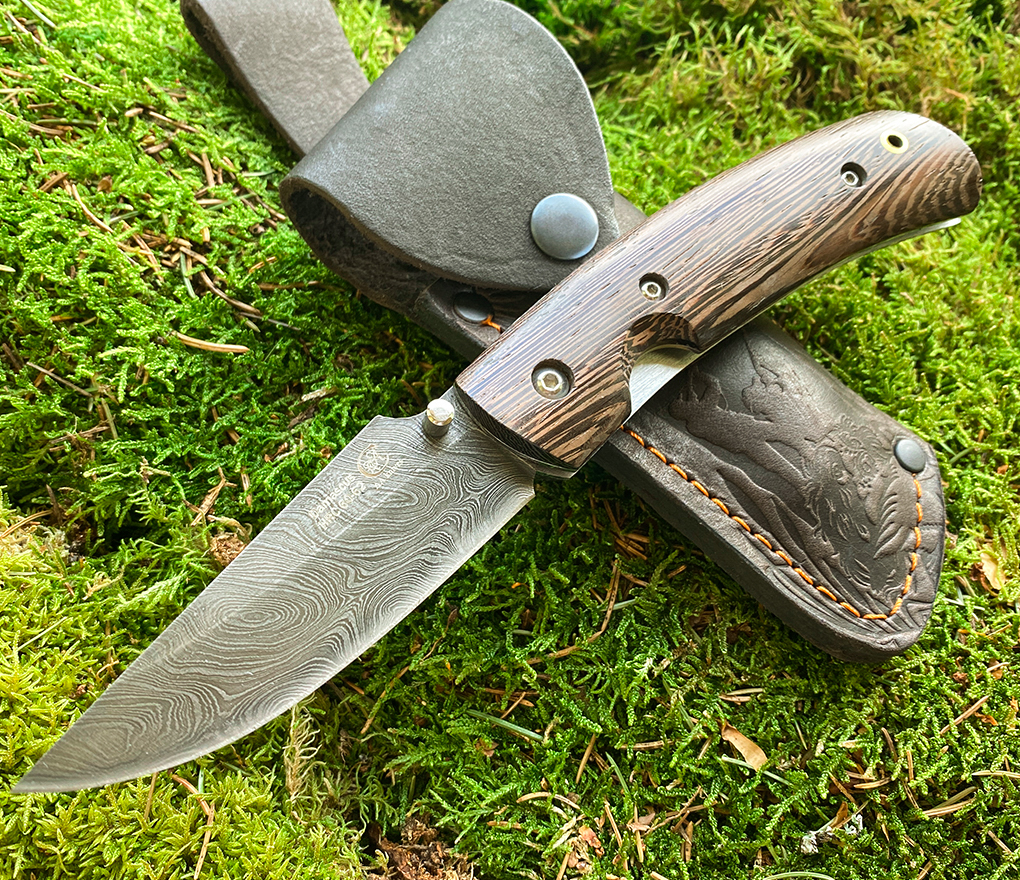
An important detail often overlooked is the guard between the handle and blade. It’s not a decorative element but a safety feature that stops your hand if it slips forward during cutting. When working with wet or oily hands, such as when processing game, this feature can protect your fingers even when grip isn’t perfect. This is why knives designed for game processing and butchering have a mandatory guard rather than an optional one—you can see this, for example, on Damascus steel pocket knife, folding knife, where this element is built in for exactly this purpose.
2. A stable surface—before cutting, not after an accident
The cutting board must be immobile. Place a damp cloth or silicone mat under a slipping board—this takes ten seconds but prevents most accidental slips. Never cut while holding the product in the air, even if it seems faster—this applies to onions in the kitchen and branches or rope on a hike.
In the workshop, the same principle applies to the material being cut—wood, leather, or rope. The material should be secured in a vise or held with your other hand so the blade’s direction never points toward your other hand or body. The cutting direction should always be away from yourself, never toward yourself.
3. Proper knife passing to another person
This is when surprisingly many injuries happen, especially in the kitchen and workshop, where knives are often passed in a hurry. The correct procedure—hold the knife by the blade base (not the sharp edge), point the handle toward the recipient, and only then does the other person take it. Never hand a knife with the handle toward yourself and the blade toward the other person, and never throw a knife to someone no matter how close they are.
If a knife needs to be left on a table for someone to pick up later, place it so the blade edge points away from the table edge and away from where people normally walk. Folding knives have an advantage here—by closing the blade in the sheath or case after work is done, the risk drops significantly, so it’s worth closing the knife immediately after finishing rather than leaving it open “for later.”
4. Why a dull knife is more dangerous than a sharp one
This sounds contradictory, but a dull blade requires more force to cut through material, and force means less control. With a blunt knife, your hand often slips because the edge doesn’t enter the material cleanly but rather compresses or bounces off the surface. As a result, the cutting trajectory becomes unpredictable at precisely the moment when the most force is applied—this is the most common injury scenario in the kitchen.
This is why regular sharpening isn’t just a matter of convenience but a safety issue. A knife that retains sharpness for a long time without frequent sharpening reduces the risk of using a dull blade—which is exactly why high-quality steel with good hardness, such as hand-forged Damascus steel with a micro-serrated structure, maintains sharpness considerably longer than mass-produced steel. This doesn’t mean sharpening isn’t necessary at all, but rather that between sharpening sessions the knife remains safe to use.
5. Storage and the sheath’s role in daily use
A knife lying loose in a drawer among other objects is a risk factor every time someone reaches into that drawer. A leather or rigid sheath not only protects the blade from corrosion and mechanical damage but also prevents accidental contact with the blade during storage. For knives used outdoors—on hikes or hunts—a sheath with a belt loop allows you to carry the knife safely and keep both hands free for other tasks without worrying about the blade catching something.
After use, it’s always worth cleaning the knife and drying it before placing it in the sheath—moisture inside the sheath is the most common cause of premature rust, and a corroded blade becomes unpredictable to use. The habit of “clean, dry, sheath” takes a minute but protects both the knife and the user in the long run.
All these habits aren’t complicated, but they need to become automatic—that’s when a knife becomes a safe and reliable tool in daily life rather than a source of risk. Laws about carrying and using knives differ by country, so it’s always worth checking local regulations.
Frequently Asked Questions
Why is a dull knife considered more dangerous than a sharp one?
A dull blade requires more force to cut through material, so the edge often slips uncontrollably rather than cutting cleanly—this increases the risk of injury.
How do you properly pass a knife to another person?
Hold the knife by the blade base, point the handle toward the recipient, and wait for them to take it—never throw it or hand it with the blade pointing at the other person.
Is the guard on a knife really necessary?
Yes, the guard stops your hand if it slips forward during cutting, and this is especially important when working with wet or oily hands.
How do you properly store a knife between uses?
Clean the knife, dry it, and place it in a sheath or case—moisture and loose drawer storage are the most common causes of damage and injury.
Damascus steel pocket knife, folding knife
 No products in the cart.