


Master Professional Cutting Techniques for Kitchen Knives
Cutting technique in the kitchen is not about force, but about control. A person who knows how to grip a knife properly and understands the difference between a chopping motion and a slicing motion achieves better results with half the effort than someone who simply presses the blade downward. Here are the fundamentals that separate professional cutting from struggling with a carrot.
The Grip That Determines Everything
Most people hold a knife at the very end of the handle, as if their fingers are there simply because they have to be somewhere. The correct grip is different: the thumb and index finger grip the blade base just above the handle, “stepping onto” the knife’s spine. This provides far more precise control than gripping only the handle with your entire palm.
The other hand—the one holding the food—works with the “claw technique.” Fingers curl inward, nails facing the blade, knuckles resting against the knife’s side. This sounds uncomfortable, but after a few minutes it becomes automatic. This position physically prevents the blade edge from cutting your fingertips, as the blade slides along your knuckles before reaching skin.
Hand Movement: Chopping Versus Slicing
There are two basic cutting motions, and each serves a different purpose.
- Rocking cut—the blade tip stays on the cutting board, and the knife’s rear rises and falls, rocking across the food like a rocking chair. This works well for fine dicing of onions, garlic, and herbs. It requires a curved blade profile.
- Push or pull cut (slicing)—the knife is lifted completely at one point, then placed in front of the food and drawn through in a single motion forward or backward. Use this for meat, bread, and large vegetables, where a clean, even cut without crushing is important.
The mistake most beginners make is pressing the knife straight down, as if chopping wood. This tires your hand, crushes the food, and produces an uneven cut. The blade is designed to glide, not just move vertically—use that to your advantage.
The Cutting Board Affects Your Blade More Than You Realize
A cutting board is not just a work surface—it directly impacts how long your knife stays sharp. Glass, stone, or ceramic boards look nice, but they are enemies of the edge: each cut on a hard surface dulls the blade slightly. Wood and plastic boards are softer than steel, so the blade sinks into them slightly rather than bouncing off.
Wooden boards (especially oak or birch) are the best long-term choice—they are hard enough not to deform but soft enough to protect the edge. Plus, wood’s natural structure “closes” after a cut, which reduces bacterial buildup. Plastic boards work for daily use and are easier to wash in the dishwasher, but over time they develop grooves where moisture collects.
Why Blade Shape and Steel Type Change Your Experience
Not every knife works equally well for both cutting techniques. A chef’s knife with a distinctly curved blade is designed for rocking—its profile allows the edge to roll across the board continuously. A straighter blade knife, such as a santoku style, works better with a slicing motion and precise, straight cuts.
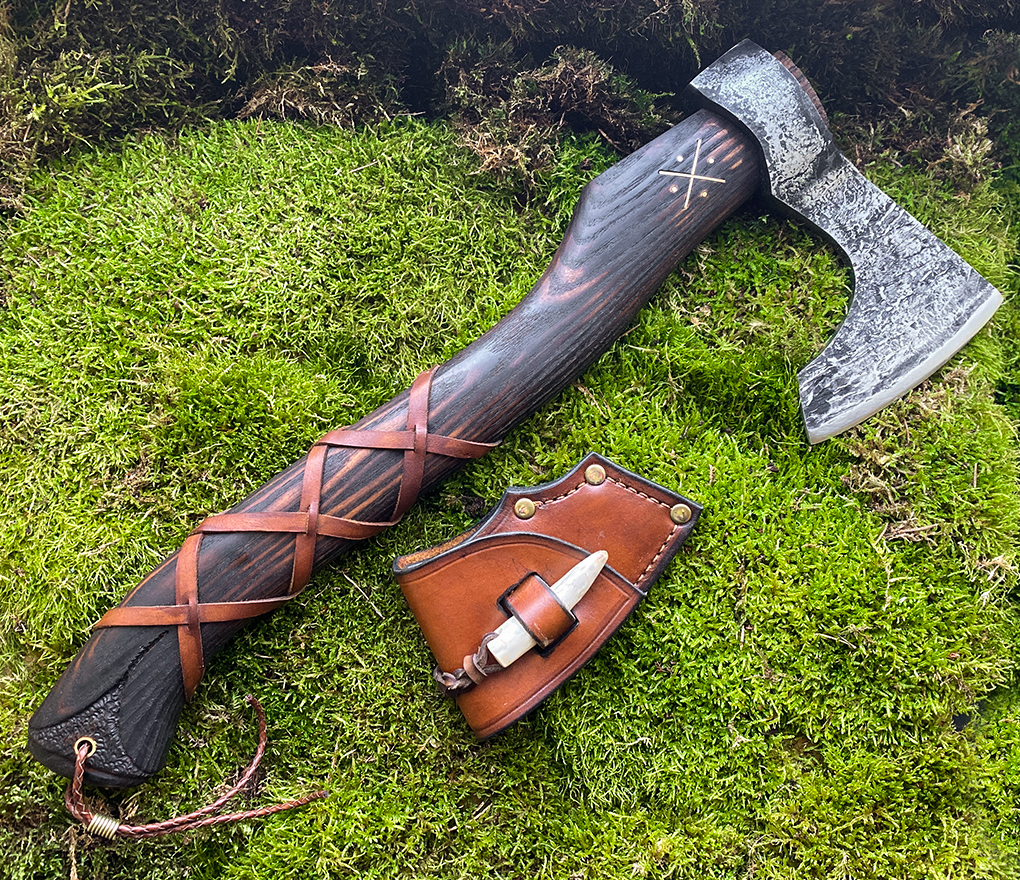
Steel hardness affects how long the blade stays sharp between sharpenings and how easily it is restored. Interestingly, these same principles—shape, edge angle, steel behavior under load—are relevant outside the kitchen. For example, SMALL VIKING AX – 2 – Very good Forged Carbon Steel is forged from carbon steel with visible forging marks, and its edge geometry is designed for entirely different work—heavier, impact-style cuts rather than fine vegetable slicing. This illustrates how much the task determines blade shape: a kitchen knife needs a thin, flexible edge for precise slicing, while an ax or heavier blade needs a thicker, more durable edge that withstands impacts.
Practical Tips for Daily Use
- Start with slow movements—speed comes naturally as your hand develops muscle memory, not by forcing yourself to rush.
- Keep the blade close to the food surface rather than lifting it high in the air—a smaller movement range means better control.
- Regularly check that your cutting board is not developing grooves where moisture and bacteria collect.
- After each use, wash and dry the blade immediately—moisture on steel accelerates corrosion regardless of knife type.
- Match the knife to the task—a versatile knife handles many jobs, but a specialized blade always works more efficiently for specific work.
Cutting technique is not complex science, but it requires conscious practice. Once your hand remembers the correct grip and blade movement, kitchen work stops being a struggle and becomes a simple, even enjoyable routine.
Frequently Asked Questions
What is the difference between a rocking cut and a slicing cut?
In a rocking motion, the blade tip stays on the board and the edge rolls across the food—ideal for fine dicing. In a slicing cut, the knife is lifted completely and drawn through the food in one motion—better for meat and large pieces where a clean cut without crushing is needed.
Which cutting board is best for protecting the blade?
Wooden boards are the best choice—they are soft enough to protect the edge but hard enough not to deform. Glass and stone boards should be avoided as they dull the blade.
How do you hold your other hand correctly while cutting?
Curl your fingers inward with nails facing the blade, so your knuckles rest against the knife's side. This protects your fingertips as the blade glides along your knuckles rather than reaching skin.
Does one knife work for all cutting techniques?
Not necessarily. A curved blade knife works well for rocking motions, while a straighter blade performs better with slicing cuts and precise work.
SMALL VIKING AX – 2 – Very good Forged Carbon Steel
 No products in the cart.