


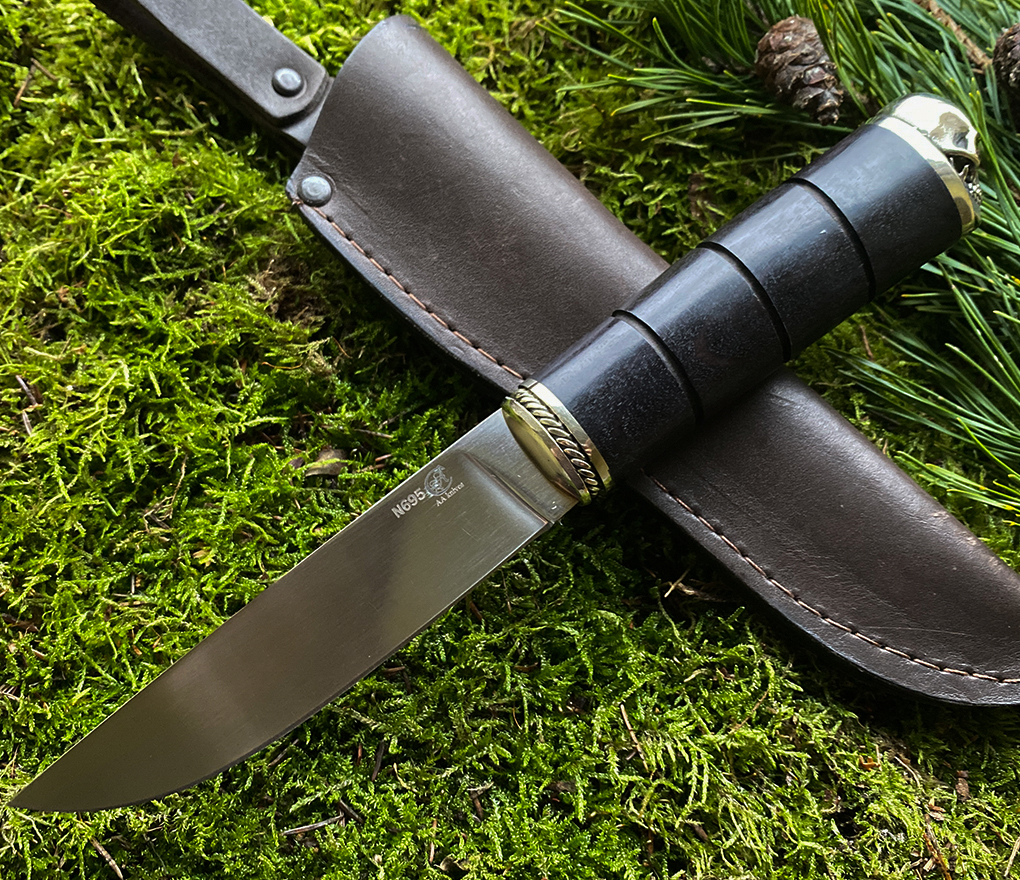
Wash or Wipe? Complete Knife Care Guide
Most knives don’t die from overuse. They die from moisture left in the blade-handle joint, from the dishwasher, or from sitting wet in a pack. Care isn’t complicated, but it needs to be systematic — not “whenever I remember.” Below is a sequence that can become a five-minute habit after every use.
1. Washing: Hand, Not Machine
The dishwasher is one of the fastest ways to ruin a knife — hot water, steam, and cleaning chemicals take their toll on both the blade and wooden or stabilized wooden handles. Even stainless steel doesn’t respond well to such treatment, but natural wood can shrink, crack, or lose its shape.
The right approach is simple: warm water, mild dish soap, soft sponge side. Wash the blade from spine to edge, not the other way — this reduces your risk of cuts. If the knife was used on meat, fish, or oily materials during hunting or fishing, wash it right after use, not in the evening when you get home.
2. Drying: The Forgotten Step That Causes Rust
Most rust problems don’t come from washing, but from poorly dried knives. A water droplet hidden between the blade and crossguard or in the handle can work for hours before the first signs of corrosion appear.
- Wipe the knife immediately with a dry cloth, don’t let it “air dry.”
- Pay attention to the joint between blade and handle — moisture accumulates there most.
- Before placing in a sheath or drawer, make sure the metal is completely dry to the touch.
3. Storage: A Sheath Isn’t a Cabinet Forever
Leather or fabric sheaths look like a safe storage place, but they accumulate moisture from the air and residue when stored long-term. If a knife is used infrequently, it’s better to store it separately from the sheath — in a wooden box, cloth bag, or simply on a dry shelf.
Saving space by stacking knives in a drawer often means blades rubbing against each other’s edges. This doesn’t cause rust, but it quickly dulls the fine edge. If a knife, such as the “SKULL” model, has a sand-blasted blade, this slightly reduces visible scratches, but doesn’t replace proper storage.
4. Oiling: When It’s Needed and When It’s Not
High corrosion-resistant steel, such as chromium-based stainless alloys, don’t require oiling after every use. However, if a knife is stored unused for extended periods or frequently used in wet conditions — by a river, sea, or during rainy hunting — a thin coat of mineral oil or specialized knife oil on the blade helps prevent microscopic corrosion even in high-quality steels.
Oil only the blade, not the handle. Wooden or stabilized wood handles “breathe” differently, and oil can leave marks or change their texture.
5. Sharpening: Regular, Not Emergency
A dull knife requires more pressure, but increased pressure raises the risk of slipping — so regular sharpening is a safety issue, not just convenience. It’s better to sharpen frequently and lightly than to wait until the edge is completely gone and needs aggressive grinding.
High-hardness steels that reach 58-59 HRC levels hold sharpness longer than softer alloys, but when it’s time to sharpen them, they require a fine-grained stone and more patience. Rushing here creates an uneven edge.
6. What Most People Do Wrong
- Cutting on glass or ceramic boards — this dulls the edge faster than anything else.
- Throwing knives in a drawer with other metal objects.
- Using a knife as a screwdriver or pry bar — microscopic cracks in the blade start from such stress.
- Storing a wet sheath in winter, where temperature swings accelerate corrosion.
A Routine That Actually Lasts
Care only works if it takes less effort than ignoring it. Three steps — wash, dry, check the joint — take less time than cleaning a coffee cup. If a knife, such as Knife ”SKULL” – Swedish Bohler-Uddeholm N695 stainless knife steel, is used for hunting, fishing, or hiking, this routine becomes even more critical, as wet and dirty conditions speed up any carelessness.
Check monthly that the blade joint with the handle is tight and that no microscopic spots have appeared. A problem caught early takes a minute to fix — caught late, it requires a new blade or handle replacement. Also make sure your knife complies with local regulations regarding carrying and use — these vary by country, so check local laws before taking it on trips or hunting expeditions.
Frequently Asked Questions About Knife Care
Does stainless steel need to be oiled?
Yes, especially if the knife frequently contacts moisture or remains unused for extended periods. Stainless steel is more resistant to corrosion, but not completely immune to it.
How often should I sharpen a knife I use once a week?
Light stropping on a sharpening stone can be done every two to three weeks, but full sharpening depends on the intensity of use and the material being cut.
Why can't you wash knives in a dishwasher?
Heat, steam, and chemicals damage both the blade edge and natural handle materials like wood or stabilized wood, shortening the knife's lifespan.
How do I know if the blade is starting to corrode?
Early signs are small, dull spots or color changes on the blade surface, especially near the handle joint. When noticed, wash the knife immediately, dry it, and apply a thin coat of oil.
Knife ”SKULL” – Swedish Bohler-Uddeholm N695 stainless knife steel
 No products in the cart.
