


When a Folding Hunting Knife is the Right Choice
A folding hunting knife seems universal — take it to the forest, fishing, hunting, even to quickly cut a piece of meat in the kitchen. But real experience shows that it isn’t the right choice in every situation. To understand when a folding knife truly works and when to reach for a different tool, it’s worth evaluating step by step — from the moment of purchase to everyday use.
1. Assess what the knife will be used for
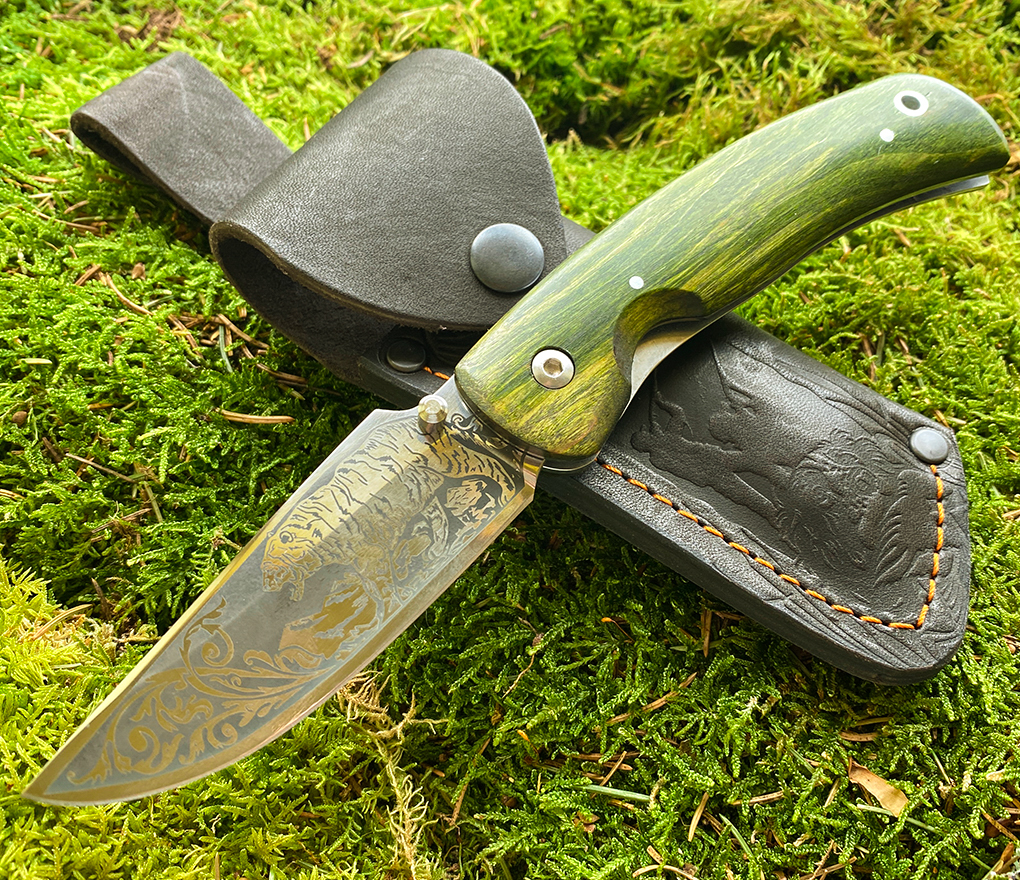
Before making your choice, answer a simple question — what task will the knife perform most often? In hunting and outdoor conditions, blade hardness and the ability to maintain sharpness without frequent honing are important. For example, Folding knife, forged stainless steel 95H18 is designed specifically for this purpose — forged stainless steel with 59 HRC hardness provides good cutting quality while remaining resilient in field conditions.
If the primary task is processing hide and meat after hunting, a blade length around 90 mm and width of 30 mm is a convenient format — small enough for precision work, yet large enough for longer, more forceful cuts.
2. Situations where a folding knife excels
- Hunting and animal processing in field conditions — compact size and leather sheath allow comfortable carrying without taking up space.
- Fishing — cleaning fish, cutting rope, preparing food at camp.
- Hiking and outdoor recreation — cutting rope, opening packaging, handling minor tasks on the trail.
- Collecting — hand-forged steel and stabilized Karelian birch handle make the knife visually interesting for those who appreciate knives as craftsmanship.
In all these cases, two factors matter — the knife needs to be carried along and used for short, precise tasks. This is exactly where the folding format wins.
3. Situations where a different tool is better
A folding knife isn’t designed for heavy work. If you need to split firewood, chop branches, or process a large animal with thick bone structure, a fixed-blade knife or axe is the better choice. The hinge of a folding knife can become loose over time if regularly subjected to impact loads.
In the kitchen for everyday cooking — cutting onions, meat, and vegetables in large quantities — a specialized kitchen knife with a longer and thinner blade will be more comfortable and precise. A hunting knife with a 2 mm thick blade is designed for durability, not for fine slicing.
4. Test the handle and grip before purchasing
A stabilized wooden handle, such as Karelian birch, looks attractive, but it must also be practical. Check that the handle doesn’t slip in wet hands and that its shape suits your palm — this is especially important when hunting, when hands are often wet or bloody. A total length of about 215 mm allows the knife to feel stable in hand without becoming too heavy to carry.
5. Care that extends the knife’s life
Stainless steel doesn’t mean the knife requires no maintenance. After each use, the knife should be wiped dry, especially if it has been in contact with blood, fish slime, or saltwater. The folding mechanism should occasionally be cleaned of sand and debris so the hinge doesn’t become stiff.
Sharpening should be done regularly but gently — light touches with a stone in field conditions are better than aggressive honing, which can damage blade geometry. Steel with 59 HRC hardness holds an edge well, but it still requires attention rather than complete neglect.
6. Transportation and storage
A leather sheath, often included with this type of knife, protects both the blade and the user. When storing the knife for extended periods, keep it in a dry location and periodically check for rust spots on the blade, especially at the connection with the handle. When transporting the knife in a car or bag, ensure it’s securely fixed — in the case of a folding mechanism, this also means checking that the locking mechanism works properly.
7. Remember local regulations
Before carrying the knife on a trip, hunting expedition, or in a public place, check local regulations — requirements for blade length and carrying methods vary across different countries and situations.
A folding hunting knife is a tool that rewards those who use it deliberately — who know when it’s the right choice and don’t ask more from it than it can deliver.
Frequently Asked Questions
Is a folding hunting knife suitable for the kitchen?
For occasional, light use, yes, but for daily cooking, a specialized kitchen knife with a thinner blade is better.
How often should a hunting knife be sharpened?
It depends on usage intensity, but regular, gentle sharpening with the correct angle is better than infrequent, aggressive honing.
How do you care for a stainless steel blade?
After each use, wipe the knife dry, especially after contact with blood or moisture, and store it in a dry location.
Is a stabilized wooden handle durable in outdoor conditions?
Yes, stabilized wood is treated to resist moisture absorption and withstand outdoor stress better than untreated wood.
Folding knife, forged stainless steel 95H18
 No products in the cart.
